
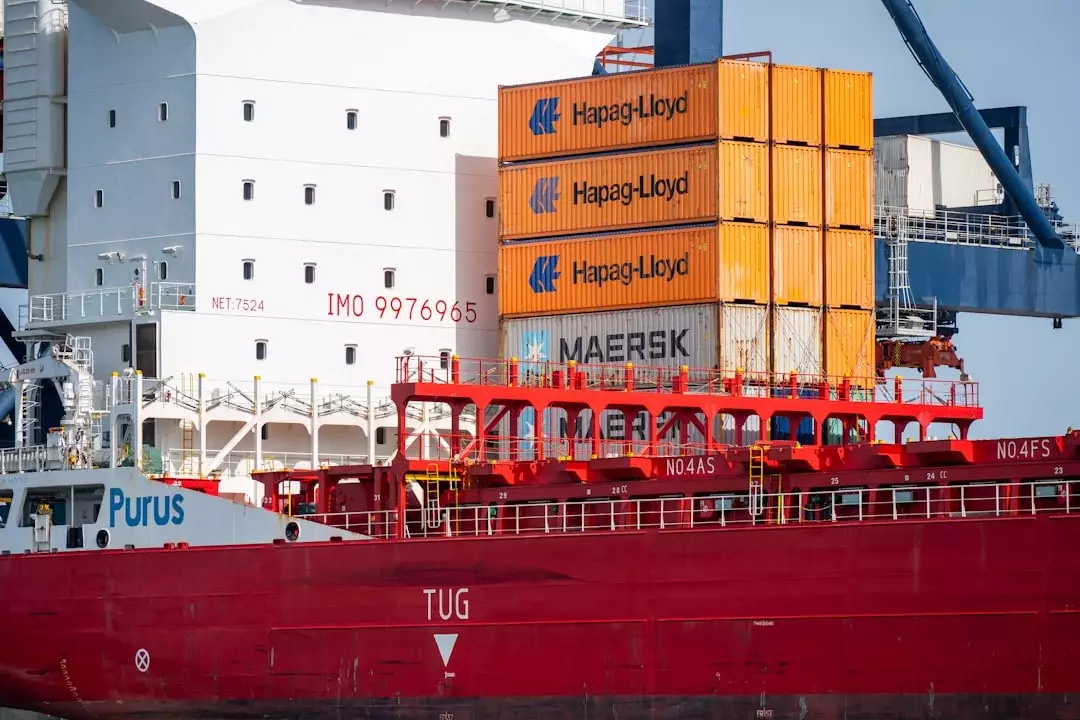
The Houthi takeover of Mokha is more than a battlefield headline. It is a reminder that in the Yemen war, geography is power, and a single port city can alter the risk calculus for the entire Red Sea shipping corridor. Mokha sits on Yemen’s western coast, close enough to the Bab el-Mandeb Strait to matter immediately for merchants, insurers, naval planners, and governments watching the flow of cargo toward the Suez Canal.
For years, analysts of the Yemeni civil war (2014–present) have warned that coastal control matters as much as front-line gains inland. That is because the Houthi movement does not need to dominate every kilometer of shoreline to threaten commerce. It only needs the ability to observe, pressure, and potentially strike along a narrow waterway linking the Gulf of Aden to the Red Sea. In maritime terms, that is leverage of the highest order.
Why Mokha matters beyond one captured port
Mokha has always been strategically attractive because it sits on a coastal edge where land warfare and sea power collide. The city is not just a name on a map; it is part of a wider littoral system that includes the Red Sea, the Yemeni coast, and the approaches to one of the world’s best-known chokepoints. Even when a force cannot fully seal a strait, control of nearby territory can improve surveillance, facilitate the movement of weapons, and create pressure on passing container ships and oil tankers.
This is why maritime specialists talk about maritime security and sea lanes in the same breath as ground offensives. A port city can be a listening post, a staging ground, a tax base, or a symbol of legitimacy. In the context of Yemen, those functions can overlap quickly. The result is a war where coastal territory becomes a message to shipping companies and foreign capitals alike.
A chokepoint does not need to be closed to be dangerous
That distinction matters. The Bab el-Mandeb Strait does not have to be physically blocked for trade to suffer. The mere possibility of attacks can force ships to alter routes, add security measures, delay sailings, or pay higher premiums. This is one reason the corridor attracts attention from the International Maritime Organization and from policy specialists studying trade routes under stress.
For a useful primer on the official framing of maritime risk, readers should also review the UNCTAD Review of Maritime Transport and the U.S. Energy Information Administration’s analysis of world oil transit chokepoints. Those sources do not dramatize the issue; they explain why narrow waterways amplify uncertainty across global logistics.
How the Houthi movement turns geography into leverage
The Houthi movement has repeatedly shown that it can combine conventional battlefield gains with asymmetric warfare. That means missiles, drones, naval mines, fast boats, and media signaling can matter as much as tanks and checkpoints. In a conflict shaped by the broader regional rivalry captured in Iran–Yemen relations, the message is clear: the coastline is not merely territory, it is an instrument of pressure.
Experts often disagree on how much direct external control exists over Houthi decision-making. But there is broad agreement that the group benefits when it can present itself as the actor capable of influencing a vital corridor between the Red Sea and the Gulf of Aden. That is why even localized advances can produce global headlines. They are read not only as tactical wins, but as signals of reach.
In maritime conflict, perception is operational power. If ships believe a route is unsafe, the economic effect can appear before any physical blockade is attempted.
What the takeover changes for shipping lanes and insurers
From the perspective of a ship operator, the most immediate risk is uncertainty. A shipping line does not need a direct hit to suffer damage; it needs nervous customers, rerouting costs, slower schedules, and higher marine insurance premiums. The commercial logic is brutally simple: if a corridor looks volatile, the market prices volatility into every voyage.
In practice, that can mean longer routes, disrupted inventory planning, and more pressure on the global supply chain. The effect is especially sharp for time-sensitive cargo, energy shipments, and vessels that depend on reliable schedules. If security conditions deteriorate further, operators may choose to skirt the region entirely, even when the detour adds days at sea and raises fuel consumption.
Stakeholder impact at a glance
| Stakeholder | Main exposure | What matters most |
|---|---|---|
| Shipping lines | Route disruption, delays, security escorts | Operational continuity and customer confidence |
| Insurers | War-risk pricing, claims uncertainty | Accurate threat assessment and rapid repricing |
| Energy traders | Supply interruption and volatility | Chokepoint monitoring and hedging |
| Governments | Strategic deterrence and naval posture | Keeping the corridor open without widening the war |
| Coastal communities | Insecurity and economic disruption | Basic safety, port access, and humanitarian access |
That table only captures the first-order effects. The second-order effects are often more painful: rerouted goods, higher freight rates, delayed raw materials, and a wider sense that the sea is no longer neutral infrastructure but contested space. That is a serious concern for any economy dependent on predictable maritime movement.
The regional and global stakes are larger than Yemen alone
It is tempting to treat Mokha as a local story about one city in a fractured war. That would be a mistake. The corridor connected to Bab el-Mandeb links the Red Sea to the Gulf of Aden and onward to one of the world’s most important commercial arteries. Disruption there affects not only Yemen’s neighbors but also Asian, European, and African trade networks. In geopolitical terms, a small coastal gain can echo across a very large map.
The comparison with other chokepoints is instructive. The Suez Canal, the Bab el-Mandeb, and the wider Red Sea form a system rather than isolated points. When one segment becomes unstable, the others inherit the shock. That is why navies, freight forwarders, and ministries of trade all watch the same corridor, even if they are worried about different things.
There is also the political dimension. A Houthi advance can complicate negotiations over ceasefires, humanitarian access, and regional de-escalation. It may also intensify pressure on states with naval assets in the area, because every patrol becomes a balancing act between deterrence and escalation. In a conflict where naval blockade rhetoric can spread faster than diplomacy, the risk of miscalculation is never far away.
What smart risk management looks like now
For commercial operators, the right response is not panic but disciplined preparation. Companies that move cargo through the region should revisit voyage plans, charter-party clauses, incident reporting chains, and security communications. They should also coordinate with flag states, insurers, and maritime security centers before conditions deteriorate, not after.
- Monitor official advisories from the IMO and relevant naval coordination centers.
- Review alternative routing scenarios and the financial impact of delays.
- Confirm war-risk coverage, exclusions, and documentation requirements.
- Stress-test inventory plans for longer lead times.
- Use clear escalation protocols for bridge teams and shore-based crisis managers.
Businesses also benefit from authoritative background reading. Related internal resources could include Yemen conflict analysis and Red Sea shipping risk guide. Those pages can help teams move from headline reaction to structured planning.
And for readers trying to understand the hard logic behind the risk, the key concept is this: the security of a port is not measured only by what happens on its docks. It is measured by the confidence of everyone who must sail past it.
Frequently asked questions about Mokha and Red Sea shipping
What is the Bab el-Mandeb Strait and why does it matter?
The Bab el-Mandeb is the narrow waterway between Yemen and the Horn of Africa that links the Red Sea to the Gulf of Aden. Because so much international shipping uses this route, instability there can affect freight, energy markets, and insurance pricing far beyond the region.
Can the Houthis shut down Red Sea shipping completely?
Not necessarily. Total closure is difficult, but they do not need complete closure to create damage. Threats, attacks, and the risk of escalation can be enough to change ship behavior, raise costs, and force rerouting. That is why control of places like Mokha matters.
Why do insurers react so quickly to developments like this?
Insurers price probability and exposure. When a port city falls to a group capable of striking shipping lanes, the uncertainty rises immediately. Premiums can change before any new attack occurs because the market is reacting to the likelihood of future claims.
What should logistics teams watch first?
They should watch route advisories, vessel movements, naval notices, and the status of nearby ports and terminals. They should also track whether the situation stays local or begins to influence the whole Gulf of Aden and Red Sea corridor.
The question beneath the headline
The most important insight is that Mokha is not valuable only because it changed hands; it is valuable because it changes what others think can happen next. In a place where maritime security, trade routes, and war all overlap, perception can alter shipping behavior as powerfully as artillery. That is why the capture of a single coastal city can send a tremor through the entire Red Sea system.
What happens next will depend on whether the takeover remains a local tactical gain or becomes part of a broader campaign to pressure the Bab el-Mandeb corridor. If the latter, the world may see higher freight costs, greater naval presence, more diplomatic friction, and a sharper contest over how much leverage armed groups can extract from geography. The unanswered question is not whether the corridor matters; it is how much disruption the region can absorb before maritime trade itself begins to reorganize around permanent insecurity.
Frequently Asked Questions
Why does control of Mokha matter if the Bab el-Mandeb Strait itself was not fully captured?
Because maritime risk is created by proximity, not just formal control of the chokepoint. A force in Mokha can improve surveillance, threaten nearby routes, move weapons more easily, and signal capability to ships transiting the corridor. Even without physically sealing the strait, that presence can raise the perceived danger for traffic bound for the Suez Canal.
How can a port city increase shipping risk without any direct attacks on vessels?
The threat of attack is often enough. Shipping companies may reroute, slow down, add private security, or suspend transits if they believe a corridor is unstable. Those precautionary costs are real economic impacts, and insurers often respond to the same uncertainty by raising premiums before any strike occurs.
Why do analysts say coastal territory in Yemen is as important as battlefield gains inland?
In Yemen’s war, coastal holdings can function as listening posts, launch points, revenue sources, and bargaining chips. Inland advances may change the balance on the ground, but control of the coast affects trade, foreign attention, and leverage over maritime traffic. That makes even limited shoreline gains strategically outsized.
What is the connection between Mokha and the Suez Canal trade route?
Mokha sits near the southern entrance to the Red Sea, close to the Bab el-Mandeb Strait, which connects the Gulf of Aden to the route north toward the Suez Canal. If that corridor becomes risky, ships traveling between Asia and Europe may face delays, detours, and higher operating costs throughout the journey.
Why do insurers react so quickly to Houthi gains along the Red Sea coast?
Insurers price risk based on the likelihood of disruption, not only on confirmed damage. If a group gains coastal access near a chokepoint and has a record of asymmetric tactics, underwriters may assume a higher chance of incidents. That can immediately raise war-risk premiums and make coverage more expensive or harder to obtain.