
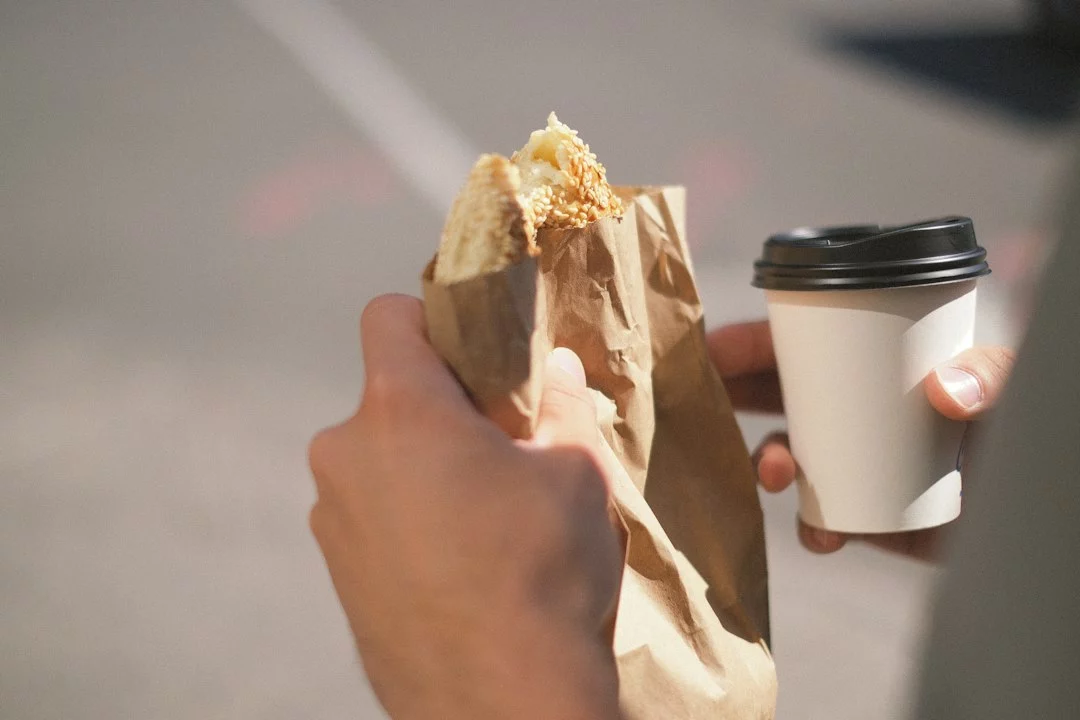
Eating while driving is often treated as a trivial bad habit, but the Toowoomba bagel incident shows why distracted driving is bigger than phone use, and why a few careless seconds can turn into a serious road-safety problem. The driver allegedly used his knees to keep the car moving in heavy traffic while buttering a bagel, which is exactly the kind of task-switching that strips away situational awareness at the wrong moment.
The detail is not funny because it is unusual; it matters because it is ordinary. Food, drinks, grooming, navigation, passengers and devices all compete for the same limited attention. In a moving vehicle, that attention is the control system. Once it is divided, the odds of a traffic collision rise, even if nothing dramatic happens immediately.
What the Toowoomba incident actually illustrates
The report describes a 29-year-old Queensland driver stopped by police in Toowoomba, a regional city in Queensland, during heavy traffic around 3:50 pm. That setting matters. A task that might already be foolish on an empty road becomes more dangerous in stop-start traffic, where braking gaps shrink and the driver must react to pedestrians, lane changes and sudden slowdowns.
The story also exposes a common misunderstanding: many motorists think risk starts only when a phone appears in the hand. In reality, driver distraction includes any activity that steals eyes, hands or thought from the road. A bagel, a butter knife and a steering wheel are not a sensible combination in moving traffic, no matter how casual the moment seems.
Why the specific detail matters
The image of someone buttering a bagel while driving is memorable because it compresses three errors into one: looking away, removing a hand from the wheel and mentally focusing on food rather than traffic. That is a textbook example of multitasking failing in a context where it cannot be done safely. The road does not pause while the driver prepares breakfast.
Eating while driving is a form of distracted driving
The phrase sounds simple, but the mechanics are worth separating. Eating while driving creates a combination of visual, manual and cognitive distraction. A driver may glance down to unwrap food, hold the item, clean up spills, or adjust posture after the first bite. Those small movements interrupt the flow of attention and reduce the ability to detect hazards early.
Visual, manual and cognitive distraction
Visual distraction happens when the driver looks at the food instead of the road. Manual distraction happens when a hand leaves the steering wheel. Cognitive distraction happens when the mind shifts to the task of eating, leaving less capacity for hazard perception. Road safety research and human-factors analysis consistently treat these as separate but overlapping risks, which is why the damage from a harmless-looking snack can be larger than the driver expects.
This is where cognitive load matters. A moving car already demands constant micro-decisions: lane position, speed adjustment, following distance, scanning mirrors, reading signs and anticipating other road users. Add food preparation, and the driver is no longer managing a single task but competing demands. The result is not efficiency. It is degraded control.
Why knees are not a substitute for control
Using the knees to steer is a poor replacement for proper control because the body position becomes unstable and reactive inputs become less precise. Steering, braking and acceleration are not isolated motions; they depend on posture, grip and the ability to respond instantly. If a driver must choose between holding food, recovering a lane position or preparing to brake, the car is already operating in a compromised state.
That is why the issue is not whether the vehicle moved a short distance without incident. The issue is that the driver was no longer ready for the unexpected. In traffic, the unexpected is normal.
The physics of a brief lapse
People often excuse distraction by describing it as brief. That argument fails because distance accumulates quickly. At 50 km/h, a car travels about 14 metres every second. At 60 km/h, it covers even more. A two-second glance down is not a tiny pause; it is a meaningful stretch of road with no full attention. If traffic slows, a car changes lanes or a pedestrian steps out, the margin for recovery collapses.
This is one reason road-safety experts dislike the word accident and prefer collision. The term reflects that many crashes are not random. They are the outcome of predictable human error, including distraction, delay and poor judgment. Road safety depends on reducing those errors before they stack up.
Why the legal problem is control, not calories
In Australia, road rules are enforced at the state level, and the practical legal question is usually not whether the driver ate food, but whether the driver maintained proper control and drove with due care. That is where incidents like this become police matters. The Queensland Police Service does not need to treat the bagel itself as the offence; the issue is the dangerous manner of driving.
This distinction is important. There are many behaviors that are not individually banned in every statute but can still support a charge if they contribute to unsafe driving. A motorist may not be breaking a specific rule called eating while driving, yet the behavior can still fit broader traffic law provisions when it produces careless or dangerous conduct.
The legal issue is conduct, not intent
Drivers often defend themselves by saying they meant no harm. That argument is weak in road safety because consequences depend on conduct, not intention. A momentary lapse caused by food, a drink or a passenger conversation can still create liability if it shows a lack of proper attention or control. In practical terms, the law is trying to capture the same truth physics already tells us: the vehicle does not become safer because the distraction feels minor to the driver.
Why non-phone distractions are underestimated
Public debate fixates on phones because they are visible, recent and easy to condemn. But a narrow focus on mobile phone use while driving can create blind spots. Food, makeup, coffee cups, children in the back seat, pets and dashboard settings all occupy the same limited attentional budget. The danger is not that every distraction is identical; the danger is that many of them are normalized.
Human factors and ergonomics research treats this as a design problem as much as a discipline problem. The cabin environment rewards convenience. Snack packaging, drink holders and navigation screens make it easy to do more than drive. But convenience is not safety. A vehicle is a machine that punishes divided attention.
| Distraction type | Main risk | Why it matters |
|---|---|---|
| Eating a bagel or snack | Eyes off the road, hand off the wheel | Creates repeated visual and manual interruptions |
| Texting or scrolling | Visual, manual and cognitive distraction | Combines several risks at once |
| Talking to passengers | Cognitive load | May be less severe, but still reduces focus |
| Adjusting navigation or music | Short attention breaks | Often underestimated because the task seems brief |
The table makes one point clear: food is not a harmless exception. In some cases, a snack is less dangerous than a phone. In others, especially when utensils, wrappers or spill risk are involved, it can produce a series of repeated interruptions that are harder to predict and easier to underestimate.
What safe driving actually looks like
There is a simple rule that experienced drivers already know: if a task requires concentration, both hands, or repeated glances downward, do it before leaving or after arriving. That is not old-fashioned caution. It is practical risk management. The safest course is to treat the cabin as a driving space first and a dining space never.
Best practices for ordinary drivers
- Eat before departure or after parking. If the drive is long, plan a meal stop rather than improvising at speed.
- Keep both hands available. Even a brief hand-off the wheel reduces your margin for correction.
- Set up the cabin before moving. Adjust mirrors, climate, navigation and audio while stationary.
- Pull over properly if you must stop for food. Do not treat creeping traffic or a shoulder stop as a safe dining position.
- Avoid multitasking myths. Driving is not the place to test whether you can divide attention.
What professional drivers should do differently
Delivery drivers, shift workers and long-distance motorists face stronger pressure to eat on the move, but that does not change the physics. If anything, it increases the need for planning. Scheduled breaks, route timing and fatigue management matter more than convenience. When a job encourages food on the go, the right answer is a better break structure, not a more ambitious balancing act behind the wheel.
That is also where modern vehicle systems can mislead drivers. Advanced driver-assistance systems can reduce some risks, but they do not make eating safe. A lane-keeping aid is not a permission slip for looking away. A driver monitoring system may detect inattention, yet it cannot reverse bad judgment after the fact.
How media coverage can distort the lesson
Stories like this spread quickly because they are bizarre. The comedy comes from the image, not the outcome. That creates a risk: people remember the joke and forget the safety message. Viral clips and novelty headlines can turn reckless behavior into entertainment, which weakens the social stigma that road safety depends on.
This is a broader problem in the age of attention economies. A story that should trigger a serious conversation about road discipline can instead become a meme about poor breakfast choices. The driver in the story is not notable because of the food. He is notable because the food exposed a larger failure in judgment.
FAQ: eating while driving and road rules
Is eating while driving illegal?
Not always as a specific stand-alone offence, but it can still lead to charges if it causes unsafe driving, loss of control or inattention. The key issue is whether the driver maintained proper care and control of the vehicle.
Can you be fined for steering with your knees?
Yes, if the behavior forms part of careless or dangerous driving. Even if there is no rule written specifically about knees, the broader legal standard is safe control of the vehicle.
What is the safest thing to do if you need to eat?
Pull over and stop in a safe legal place, then eat without pressure. If that is not possible, wait until you arrive. A delay in eating is far better than a crash.
The real lesson: attention is the scarce resource
The Toowoomba bagel incident is useful precisely because it is so ordinary underneath the spectacle. Replace the bagel with a coffee, a sandwich, a cigarette, a child asking for help or a navigation setting, and the structure of the risk stays the same. The moving car is demanding full attention, and the driver is trying to split it. That is the central mistake.
What should readers watch next? Expect road-safety campaigns to keep broadening beyond phones toward all forms of distraction, while insurers and fleet operators lean more heavily on telematics and monitoring. The hard question is whether culture changes first or enforcement does. Until that is answered, the safest assumption is simple: if a task pulls your eyes, hands or mind away from traffic, it belongs outside the drive, not inside it.
Frequently Asked Questions
Why is the Toowoomba bagel incident treated as more than a silly one-off?
Because it shows how quickly an ordinary act can become dangerous when it steals attention from driving. The issue is not the bagel itself, but the combination of looking away, using a hand for food, and reducing readiness to react. In heavy traffic, that can be enough to create a serious collision risk even if nothing goes wrong immediately.
Is eating while driving really as dangerous as using a phone?
It can be similarly risky because it creates the same three types of distraction: visual, manual and cognitive. A driver may look down, remove a hand from the wheel, and mentally shift focus away from traffic. The specific item in hand matters less than the fact that attention is being divided during a task that demands constant awareness.
Why does heavy traffic make food-related distraction worse?
Heavy traffic leaves less room for error. Braking distances shrink, lane changes happen more often, and drivers must respond quickly to pedestrians, stop-start movement and sudden slowdowns. A brief distraction that might seem harmless on an open road becomes far more dangerous when the traffic environment is unpredictable and compressed.
What makes using your knees to keep the car moving especially unsafe?
Knees cannot provide stable, precise control in a dynamic driving situation. Steering and braking depend on posture, grip and instant correction, all of which are weakened when the driver is trying to manage food at the same time. The bigger problem is not whether the car moved a short distance, but that the driver was no longer fully prepared for an unexpected event.
Does a small snack or drink count as distracted driving too?
Yes, because the risk is often in the repeated micro-actions, not just the first bite or sip. Unwrapping, holding, adjusting, wiping spills and looking down all interrupt the driving process. Even a small snack can create a chain of tiny distractions that reduce hazard detection and slow reaction time when the road demands immediate attention.