How community-run high-street services are navigating regulatory scrutiny and e-commerce growth
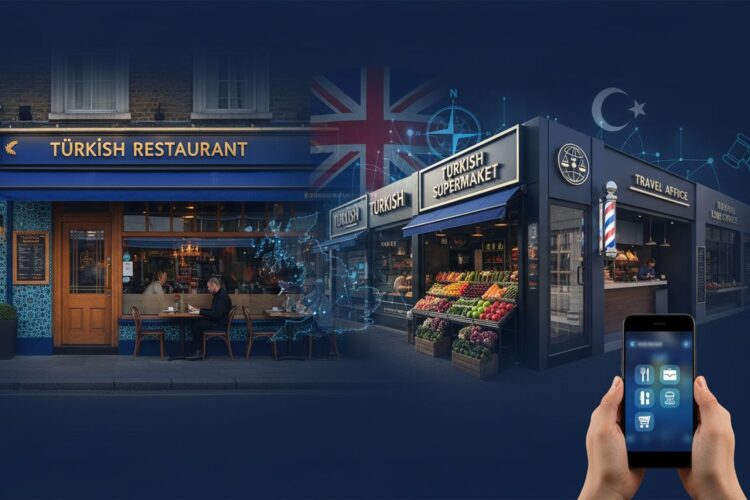
Across the UK, community-run high-street services are no longer a small side story. They have become a visible part of local infrastructure, helping people access everyday essentials, social spaces, banking support, food, parcels, and practical advice. For many neighbourhoods, including areas where Turkish-owned businesses and community networks play an important role, these services are helping keep local streets useful, familiar, and connected.
The numbers now show real scale. Plunkett UK recorded 828 community-owned businesses trading across the UK by the end of 2024, including 229 community shops and 129 multipurpose hubs, with a further 1,150 in development. In the same year, community businesses served 2 million people, employed 5,000 people, and mobilised 20,000 volunteers. That matters because the high street is changing fast: online retail keeps growing, customer habits are shifting, and regulation is becoming more visible in everything from bank closures to empty shop units.
Community-run services are now part of the high-street mainstream
One of the clearest changes in recent years is that community-run high-street services are increasingly part of the everyday local economy rather than a niche alternative. Power to Change’s Community Business Market Report 2024 found that 46% of community businesses are located on or near a high street. That places them directly inside the spaces where people shop, collect parcels, meet neighbours, and access practical services.
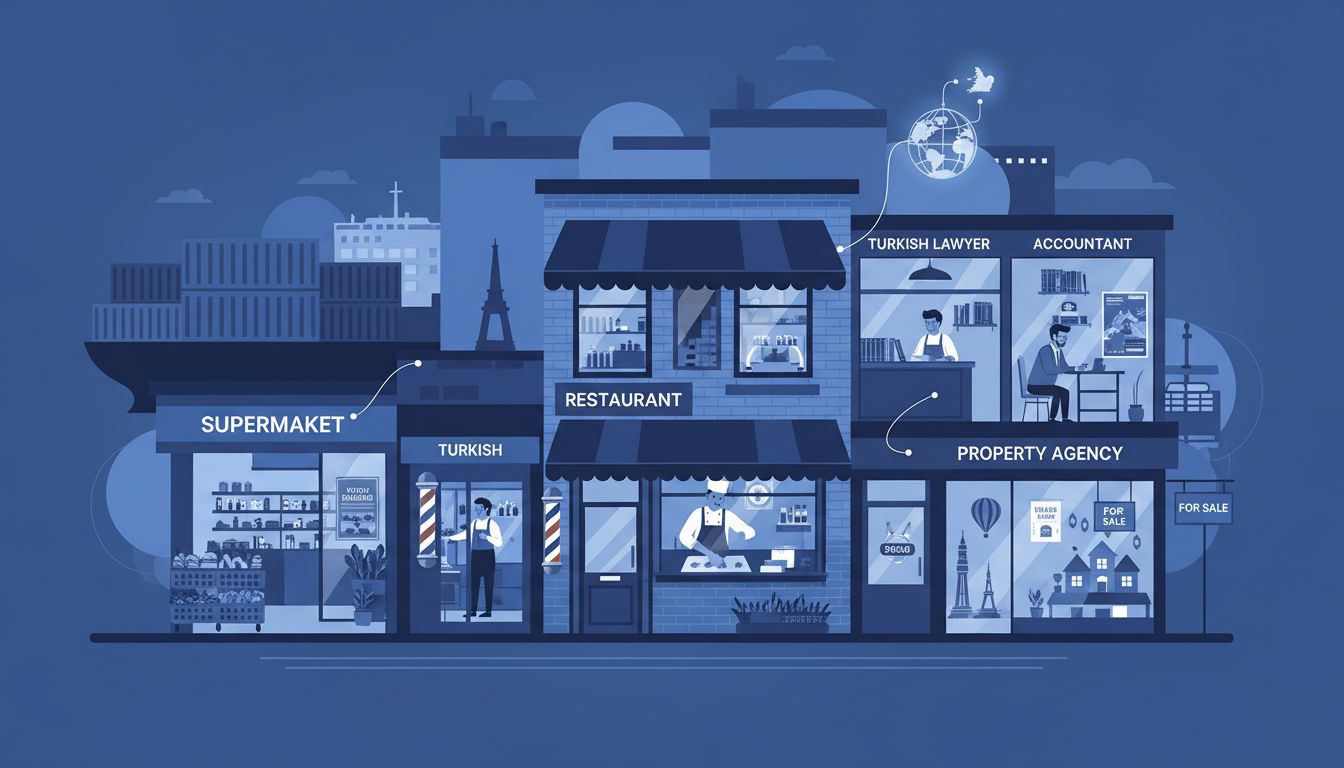
This matters because the modern high street is no longer just a line of shops. ONS geography data published in March 2026 describes high streets as mixed-service environments that include banks, post offices, petrol stations, cafes, restaurants, pubs, bars, takeaways, and shops. In other words, the businesses that survive are often those that combine convenience, service, and local trust. Community operators often fit that model well.
For Turkish community audiences in the UK, this mixed-service pattern will feel familiar. Many local businesses already blend retail, hospitality, advice, and community connection in one place. That is why community-led models can be especially relevant: they are often less about selling one product and more about meeting several local needs in a way that larger, more standardised chains may not.
Why resilience is giving these businesses more attention
Another reason community-run services are attracting interest is their strong survival record. Plunkett reports a 94% long-term survival rate and a 97.5% five-year average survival rate for community-owned businesses, describing this as far exceeding SME averages. In a period when many independent businesses face rising costs and uncertain footfall, that kind of resilience is difficult to ignore.
Part of the explanation is structural. Community businesses are often rooted in local need rather than purely in short-term commercial opportunity. They may rely on mixed income, volunteer support, local share ownership, or service partnerships, which can make them more adaptable when one revenue stream becomes weaker. They also tend to benefit from stronger emotional loyalty because customers often feel they are supporting something that belongs to the area.
That resilience does not mean they are free from pressure. Plunkett’s 2025 rural retail research says community-owned shops are being pushed to adapt to “ever-changing consumer behaviours” alongside supply-chain and cost challenges. Still, the sector’s willingness to evolve is notable. Plunkett said feedback from spring 2025 roadshows attended by more than 80 community-owned shops was “overwhelmingly receptive to change,” suggesting that many operators are preparing to adapt rather than simply defend old models.
Regulatory scrutiny is becoming both a pressure and a protection
When people talk about pressure on the high street, they often mean rent, energy bills, and online competition. But regulation is increasingly part of the picture too. For community-run high-street services, scrutiny can feel like a double-edged force: sometimes it creates hurdles, and sometimes it protects essential local provision.
On the difficult side, Power to Change found that 60% of community businesses said barriers prevent them from taking over vacant spaces and buildings that could support high-street sustainability. Only 28% agreed that local authorities encourage community businesses to participate in regeneration. That gap suggests many groups are willing to step into empty units but still face procedural friction, unclear processes, or a lack of active local support.
At the same time, regulation can also create opportunity. The House of Commons Library noted that powers allowing councils in England to run High Street Rental Auctions came into force on 2 December 2024. These powers are designed to tackle long-term vacancy, but the parliamentary scrutiny around the regulations also shows that councils must follow a formal notice-and-auction process. So while vacancy policy may open doors for community operators, it also introduces another layer of administration that smaller groups may find difficult to navigate without expert support.
Cash access shows how community pressure can shape outcomes
One of the strongest examples of helpful regulatory scrutiny is access to cash. As bank branches and ATMs continue to close, the FCA has required banks and building societies to assess local impact before making changes and to address significant gaps in provision. In its 18 September 2025 update, the FCA made clear that communities are using these rules to challenge service withdrawal and secure replacement solutions.
The results are significant. The FCA said that one year after the rules took effect, Monmouth became the 121st banking hub opened in 12 months, with 93 cash deposit services also established. It added that 20 banking hubs had been set up following requests from local communities for cash-access assessments. Cash Access UK then reported in December 2025 that it had opened its 200th banking hub, in Billericay, showing that shared banking formats are scaling quickly.
This is especially important for small businesses operating on or near the high street. FCA executive director David Geale summed it up clearly: “Cash still matters – for many consumers it’s a key budgeting tool, and for small businesses, a way to handle daily takings.” For many independent and community-facing businesses, including food shops, cafes, convenience stores, and service counters, cash remains part of everyday operations even in a digital economy.
Compliance demands are rising for surviving cash networks
Support for cash access does not mean community-facing cash services can relax. In fact, the surviving parts of the cash network are now under closer compliance attention. The FCA has said it plans a proactive multi-firm review in financial year 2025/26 into cash-based money laundering, noting growing pressure on remaining cash services such as the Post Office as branches close.
For community-run high-street services, this means the regulatory environment is becoming more serious and more technical. Businesses that handle cash heavily, provide bill payment, offer cashback, or support community banking access may need stronger processes around record keeping, staff awareness, suspicious activity controls, and operational oversight. Even when a business is mission-led, regulators will still expect proper systems.
This may create strain for smaller operators with limited administrative capacity. But it also reflects a broader truth: when community-run services become part of essential infrastructure, they are treated more like infrastructure. That means more accountability, more scrutiny, and more need for governance that matches the scale of public reliance placed upon them.
E-commerce growth is changing the role of the local shop
Alongside regulation, online retail remains a major pressure. ONS reported that in December 2025, the share of total retail sales made online rose from 28.0% in November to 28.3% in December, while online sales values were up 11.1% year on year. Those figures show that e-commerce is still expanding fast enough to keep reshaping customer expectations around convenience, range, speed, and delivery.
Yet the same ONS release also showed that physical retail has not disappeared. Total retail sales volumes in Great Britain rose 2.5% year on year in December 2025, even as online share increased. This points to an omnichannel market rather than a fully digital one. Customers are not simply abandoning place-based retail; they are using stores differently, mixing online ordering with in-person collection, local top-up shopping, social visits, and service access.
For community-run high-street services, that distinction matters. They are less likely to win by copying large online retailers on price or product range. Instead, they can compete by being useful, trusted, and close at hand. In many areas, the local outlet is now valued not only as a retail point but as a place to collect, return, ask, pay, withdraw, and connect.
Hybrid service models are becoming the practical answer
Recent convenience-sector data shows that hybrid service delivery is becoming normal. According to the ACS Local Shop Report 2025, 82% of stores offer bill payment and 70% offer cashback. It also found that 28% provide an over-the-counter parcel service excluding Post Office services, while 12% have a standalone parcel locker. These are not small extras anymore; they are part of how local businesses stay relevant.
Delivery is another sign of adaptation. ACS found that 47% of independent retailers now offer home delivery. Among those offering delivery, 35% take phone orders, 20% use a store website, 24% partner with another platform to take orders, and 24% partner with another platform for deliveries. This is a practical reminder that digital adoption does not always mean building a sophisticated app. Sometimes it means simple systems that match local customer habits.
For community-run high-street services, especially those serving older residents, families, or culturally specific customer groups, these flexible models are valuable. A business can remain deeply local while still adding digital convenience. For example, phone-based ordering, WhatsApp updates, local delivery rounds, parcel handling, or shared collection points can all help a shop or service centre remain central to daily life without losing its community character.
Changing consumer behaviour is pushing innovation, not retreat
Plunkett’s 2025 research highlights just how direct the pressure from changing shopping habits has become. It said almost half of UK shoppers now have hybrid food shopping habits, using both in-store and online, and warned that home supermarket delivery is creating new challenges for community-owned shops in isolated areas. That trend is highly relevant beyond rural villages too, because it reflects a wider habit of splitting purchases across channels.
The risk is clear: if community-run services rely only on walk-in trade for routine essentials, they may lose the most predictable parts of their customer base. But there is also an opportunity. Community operators can focus on immediacy, local identity, specialist products, trusted service, and multi-use convenience. In neighbourhoods with strong cultural ties, including Turkish communities in the UK, this may also include language familiarity, culturally relevant goods, and a sense of belonging that large remote platforms cannot easily reproduce.
The encouraging sign is that many operators appear ready to innovate. Plunkett’s roadshow feedback in 2025 suggested a sector that is open to change. That does not mean every business will digitise in the same way. Some will add delivery, others will become parcel points, some will deepen social and service functions, and others will use community ownership to secure premises that commercial operators have left behind. The common theme is adaptation with local purpose.
The future high street may favour multi-function community platforms
Recent ONS employment data helps explain why community-run high-street services may be relatively well positioned. From 2015 to 2024, retail employment fell more sharply in central high streets and shopping centres than in non-central high streets, while sectors such as Accommodation and Food Services and Other Services increased. The high street is clearly shifting away from a retail-only model.
That broader shift aligns with what we see in community business, convenience, and cash-access data. Today’s successful local outlet may sell goods, accept bill payments, provide cashback, handle parcels, support food access, host social activity, and help keep footfall alive for neighbouring businesses. Community-run operators are therefore competing less as pure retailers and more as multi-function local service platforms.
For business owners and community leaders, that is the key lesson. The future of community-run high-street services will not be decided only by nostalgia for the local shop, or only by fear of Amazon and supermarket delivery. It will depend on whether these organisations can combine trusted local presence with disciplined compliance, smart partnerships, and practical digital adaptation. In many places, that combination could make them one of the most durable formats on the modern high street.
For the Turkish community and for local businesses serving diverse UK neighbourhoods, this is an important moment to watch. Regulation is becoming more demanding, but it is also creating routes to protect cash access and potentially reopen long-empty premises. E-commerce is growing, but it is also pushing local operators to become more flexible, more service-led, and more connected to what residents actually need.
In that sense, community-run high-street services are not standing still while the market changes around them. They are navigating a more complex environment where local trust, formal compliance, and digital convenience must work together. The businesses that manage that balance well may do more than survive: they may help define what the next high street looks like.