
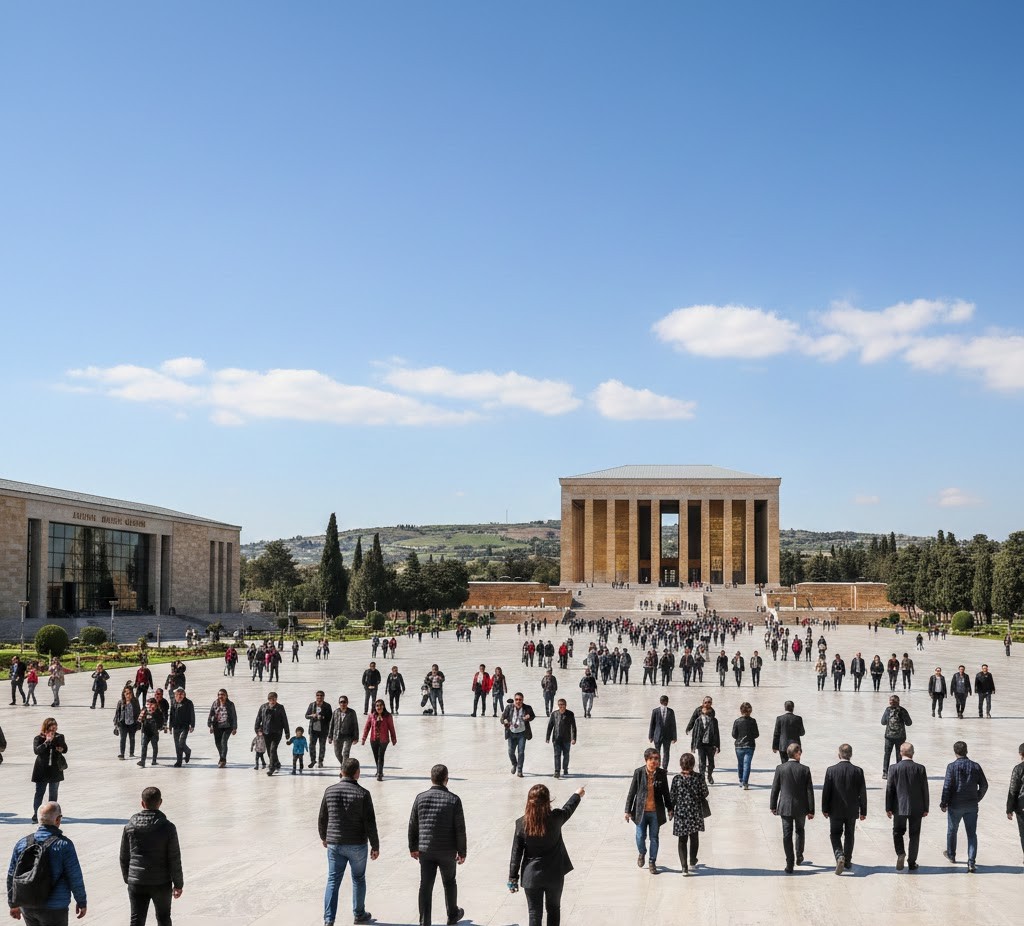
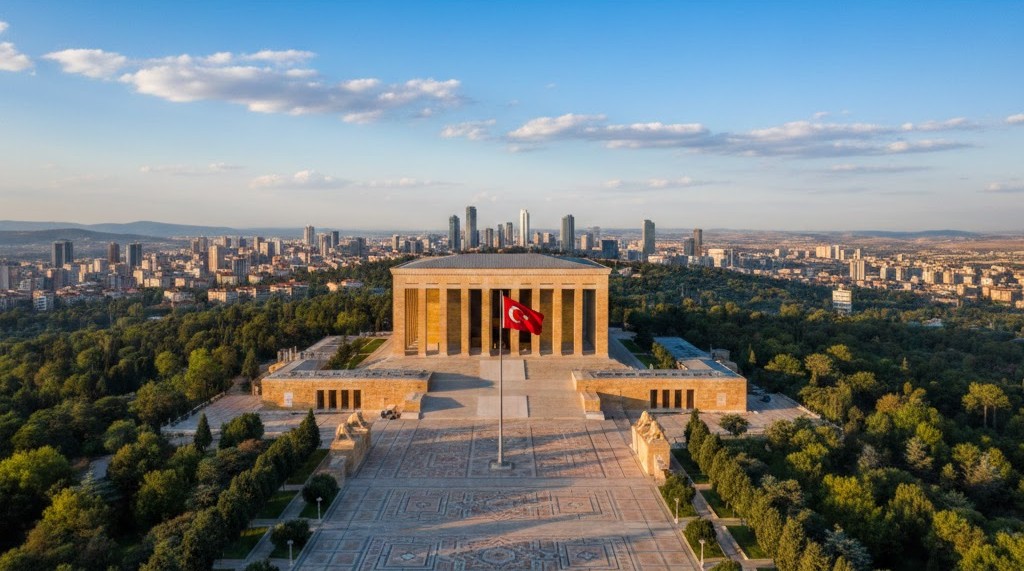
Anıtkabir serves as the grand mausoleum dedicated to Mustafa Kemal Atatürk, the first President and the founding leader of the Turkish Republic. It stands as a key symbol representing the nation. Visiting Anıtkabir gives a moving experience to anyone curious about Turkey’s rich history and cultural heritage. Situated on a prominent hill in Ankara’s Çankaya district, Anıtkabir goes beyond being just a resting place. It acts as a national monument, a remarkable piece of architecture, and a central hub to reflect on history, culture, and national pride.
Mustafa Kemal Atatürk (1881–1938) served as a military officer revolutionary figure, and statesman who guided the Turkish National Movement during the final years of the Ottoman Empire and through the Turkish War of Independence. In 1923, leaders declared the Republic of Turkey, and Atatürk became its first president. Throughout his life, he pushed forward dramatic changes to modernize Turkish law, society, administration, education, and language, which continue to inspire national pride today. After Atatürk passed away on 10 November 1938, they placed his remains in Ankara’s Ethnography Museum while preparing to construct a permanent resting place for him.Atatürk’s passing sparked widespread national grief. after, people started working to create a memorial to honor his legacy and represent the principles of the young Turkish Republic (en.wikipedia.org).

To honor Atatürk’s legacy, the Turkish government organized an international architecture competition in 1941. Many architects from both Turkey and other countries sent in their designs. After a thorough review Turkish architects Emin Halid Onat and Orhan Arda had their design chosen. It stood out for how it blended national pride with traditional architectural ideas. The site picked for Anıtkabir was a hill once called Rasattepe meaning “Observation Hill,” located in the center of Ankara. Its high location and central position symbolized a strong connection to the nation’s core and provided a perfect spot for the grand structure (en.wikipedia.org).
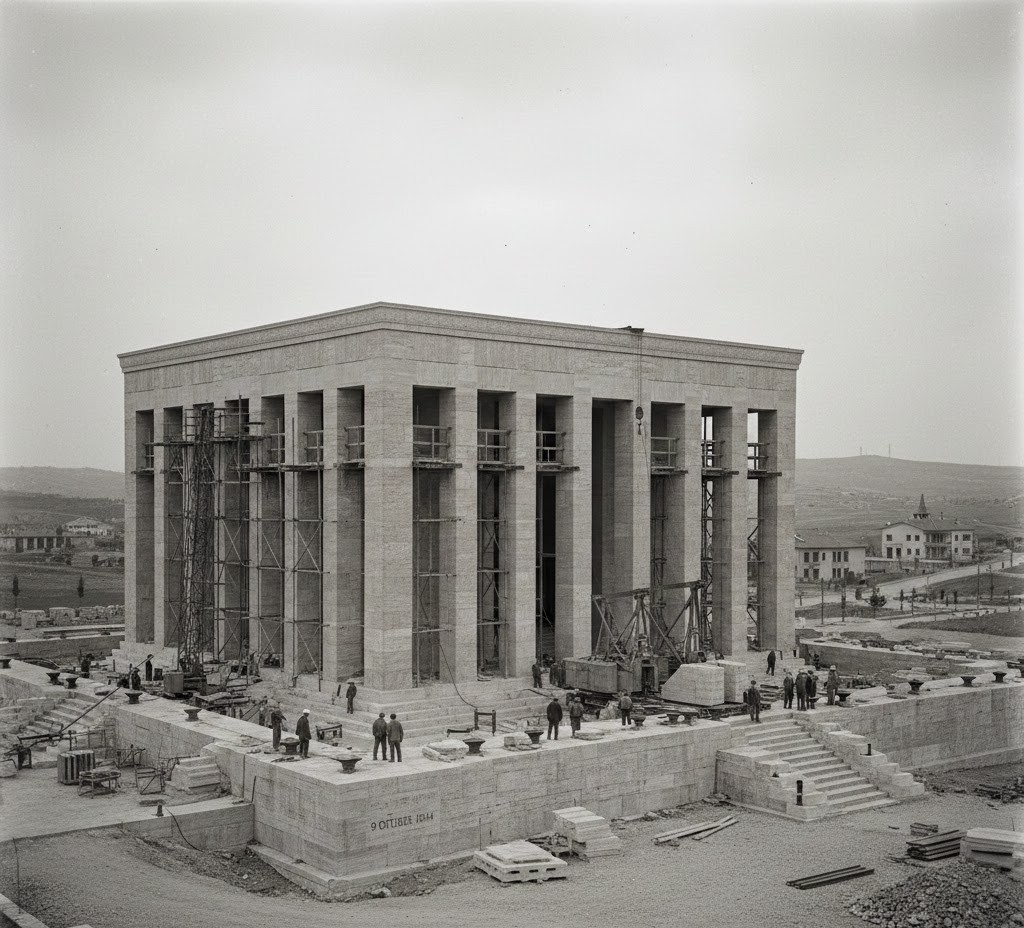
Building Anıtkabir spanned almost ten years. On 9 October 1944, workers began construction at a groundbreaking event by laying the first stone. The project between 1944 and 1953 happened in four main stages, including digging, building the structure organizing ceremonies, and adding artistic details. In 1953, the mausoleum was finished, and on 10 November that year—marking 15 years since Atatürk’s passing—his remains were moved from the Ethnography Museum to the completed site (ktb.gov.tr).
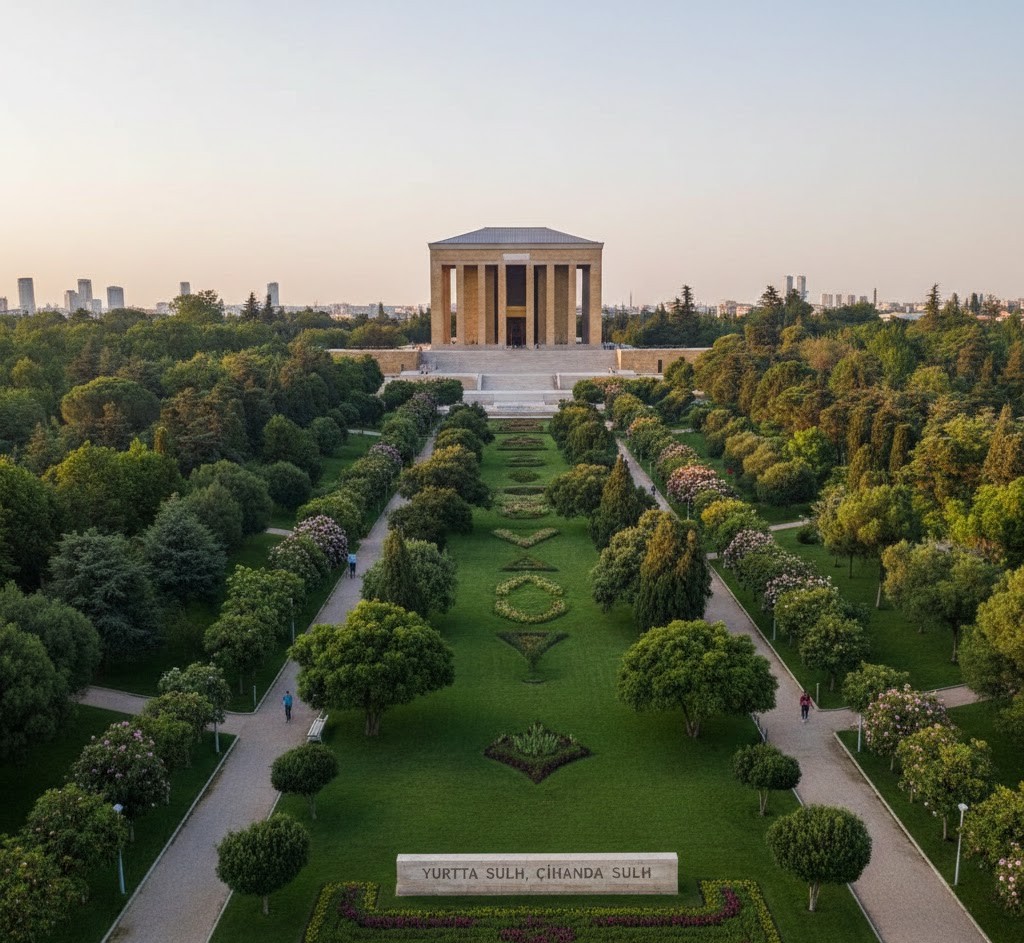
Anıtkabir stands out with its ceremonial grandeur strong classical design, and meaningful decorations. Covering 750,000 square meters, it features two main sections. The first is the Monument Block, which holds the mausoleum and spaces for ceremonies. The second is the surrounding Peace Park, a designed woodland area dedicated to peaceful coexistence. A grand staircase leads up to the Hall of Honor, the mausoleum’s central chamber. Here lies Atatürk’s symbolic sarcophagus beneath a high ceiling decorated in detail. The mausoleum sits on a rectangular platform surrounded by tall columns giving it an air of seriousness and respect.Bronze doors and stone carvings display writings from key speeches Atatürk gave such as his message to the youth and words for anniversaries. These serve both to teach important lessons and add artistic beauty (hayatadokunuyorum.org.tr). Sorry, I think you may have provided placeholder text “<original_ai_text></original_ai_text>” and “”. Could you share the actual content you’d like me to paraphrase? I’ll follow the guidelines you provided to rewrite it for you! Sculptural groups and decorative designs spread throughout the complex give deeper meaning to its symbolism.
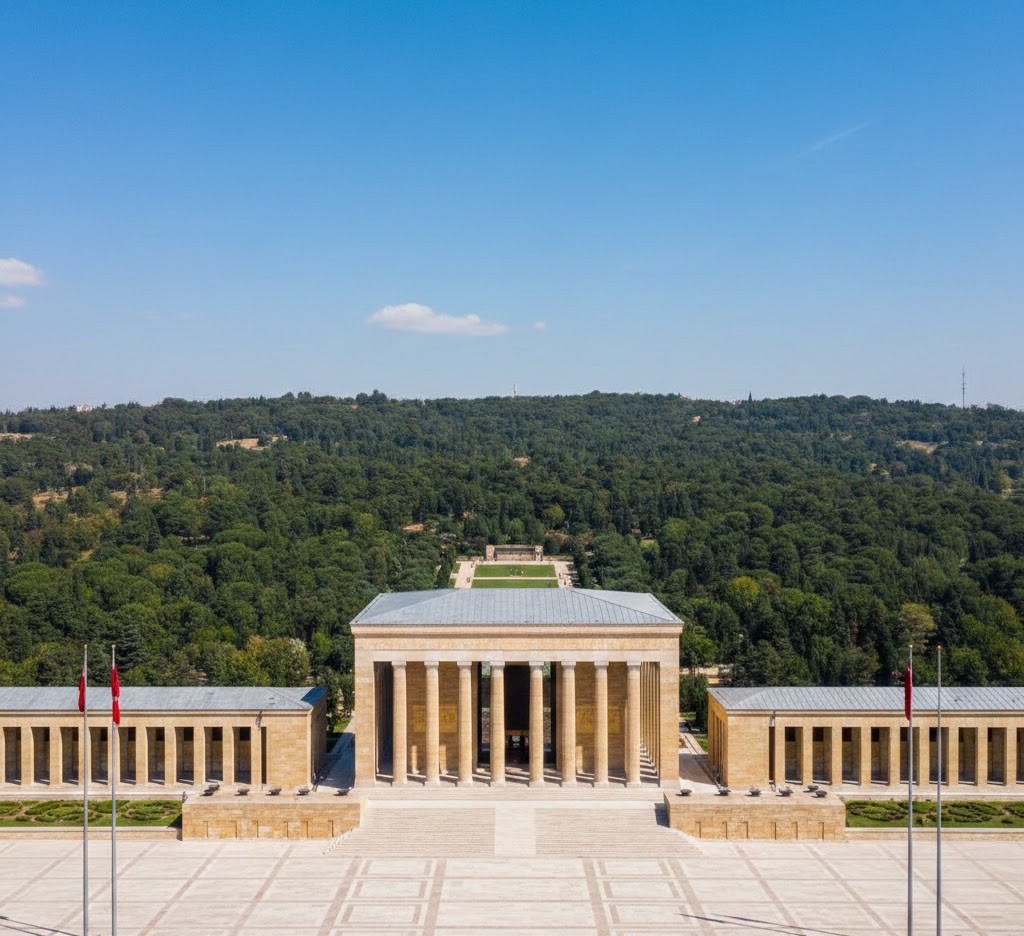
The Hall of Honor stands at the center of Anıtkabir. This is where people come to show their respect. A symbolic sarcophagus of Atatürk made from one massive marble block, faces the nation as if keeping eternal watch. Beneath it, his real grave rests in a chamber dug into the ground. This detail emphasizes tradition and honors cultural values. The inside is a stunning mix of fine materials. Marble floors come from different regions. The walls feature intricate stone patterns, and golden designs decorate the ceilings. Together, these elements create an atmosphere of respect and significance (kocaeli.ktb.gov.tr).
The burial chamber has an eight-sided design and a ceiling shaped like a pyramid influenced by Seljuk and Ottoman architecture. They placed the sarcophagus facing Mecca, following Islamic customs familiar within Turkish traditions. Surrounding the tomb are containers holding soil collected from every Turkish province and also from the Turkish Republic of Northern Cyprus. These represent the unity and connection among all regions of the nation (kocaeli.ktb.gov.tr).
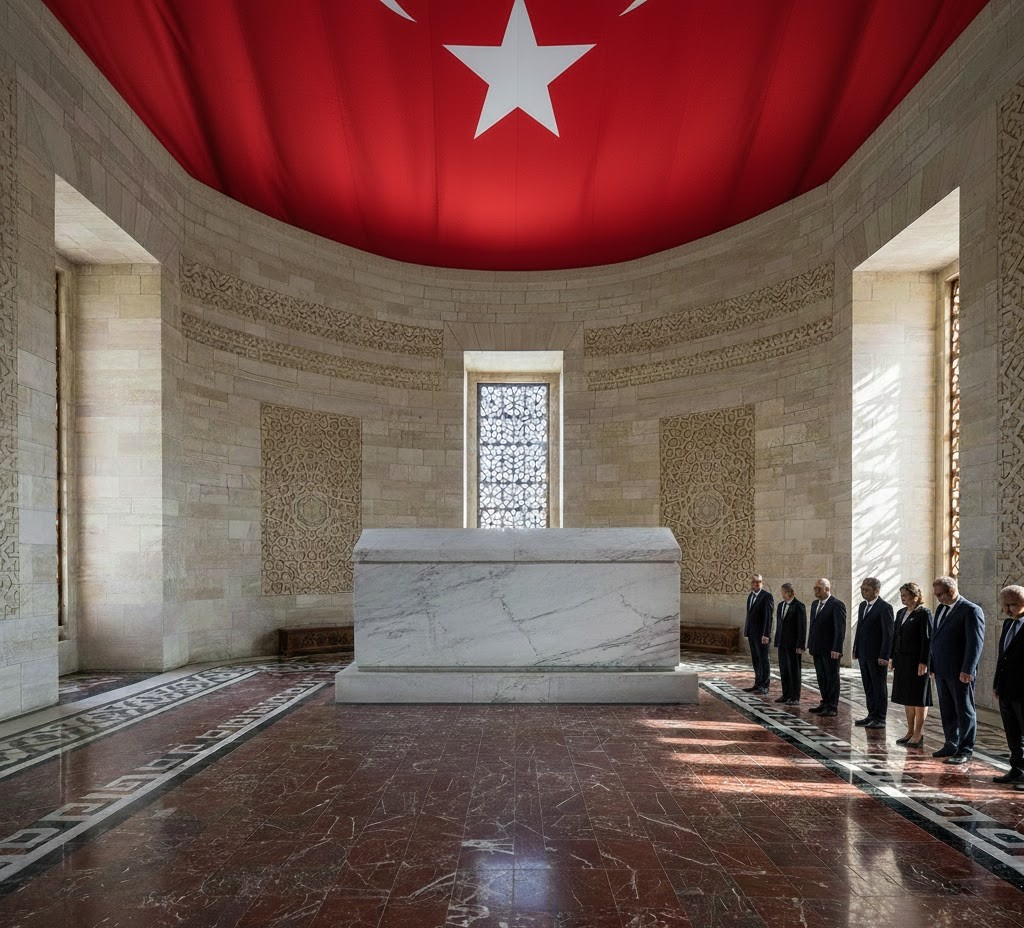
The burial chamber has an eight-sided design and a ceiling shaped like a pyramid influenced by Seljuk and Ottoman architecture. They placed the sarcophagus facing Mecca, following Islamic customs familiar within Turkish traditions. Surrounding the tomb are containers holding soil collected from every Turkish province and also from the Turkish Republic of Northern Cyprus. These represent the unity and connection among all regions of the nation (kocaeli.ktb.gov.tr).
The Peace Park surrounds the Monument Block at Anıtkabir and adds to its calm and thoughtful vibe. This large green area is home to trees and plants from all over Turkey and other parts of the world reflecting Atatürk’s famous saying, “Peace at home, peace in the world.” Visitors can enjoy quiet walks through its decorative gardens walking paths, tree-lined roads, and varied plants. The lush greenery also highlights the grandeur of the mausoleum making it stand out against Ankara’s skyline (allabouturkiye.com).
Anıtkabir holds a key place in Turkey’s civic events and remembrance activities. On Republic Day observed every year on 29 October, and Atatürk Memorial Day marked on 10 November large crowds come together to show respect, place wreaths, and honor the memory of Atatürk through formal ceremonies. Many international leaders and dignitaries make it a point to visit Anıtkabir when they come to Turkey. This act of respect highlights its role not just as a national monument, but as a acknowledged cultural site admired by people worldwide (allabouturkiye.com).
Anıtkabir holds a key place in Turkey’s civic events and remembrance activities. On Republic Day observed every year on 29 October, and Atatürk Memorial Day marked on 10 November large crowds come together to show respect, place wreaths, and honor the memory of Atatürk through formal ceremonies. Many international leaders and dignitaries make it a point to visit Anıtkabir when they come to Turkey. This act of respect highlights its role not just as a national monument, but as a acknowledged cultural site admired by people worldwide (allabouturkiye.com).
The Anıtkabir complex includes a museum that honors the life and legacy of Atatürk. It opened in 1960 and has since grown bigger. The museum showcases a wide range of items, like personal belongings military uniforms, medals, and gifts. It also features artifacts and scenes showing key moments from the Turkish War of Independence. Visitors can explore interactive and multimedia exhibits that explain the historical background of how modern Turkey was founded. This turns the memorial into a vibrant center of history, culture, and the nation’s heritage.
Anıtkabir stands as one of the most popular historical landmarks in Turkey drawing millions of people every year. Visitors come to honor, learn about, and think about the past. People visit to explore on their own, take cultural tours around Ankara, or dive into history for academic purposes. It provides a meaningful look at Turkey’s modern history. The site stays open throughout the year, and entry is free to the public. With its vast ceremonial spaces, museum displays, and scenic surroundings, it works well both for guided tours or solo exploration (allabouturkiye.com).
Anıtkabir serves as more than just a resting place; it embodies national pride shared history, and Turkey’s journey toward modernity. Its impressive architecture historical importance, and cultural value leave a lasting impression and encourage respect, thoughtfulness, and insight across different eras and communities. To explore this subject further, you can visit Wikipedia’s page on Anıtkabir (en.wikipedia.org).