
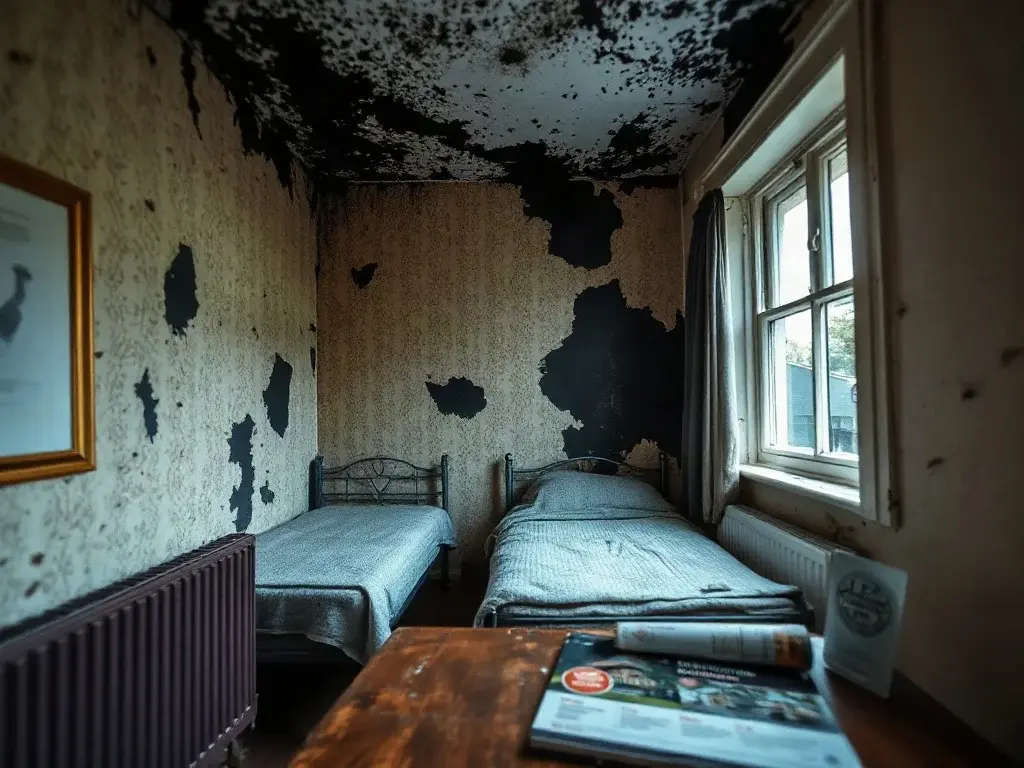
A BBC investigation has found that housing for vulnerable people, described as mouldy and infested, is being sold to overseas buyers as ethical property investment. The properties are reportedly marketed at premium prices, with claims of ‘government-backed’ returns. This article explains why that phrase deserves scepticism, how the underlying housing model works, and what investors and regulators should examine. It relies on the BBC’s headline findings and on well-established public context. Where details are not confirmed here, they are flagged as such.
What the BBC Investigation Reported
According to the BBC, the properties were housing vulnerable residents in poor condition, with mould and infestations. At the same time, they were being promoted to investors abroad as socially responsible assets. The gap between marketing and reality is the core issue. Specific addresses, sellers and sums are not reproduced here, and readers should consult the original BBC report for those details.
Why ‘Government-Backed’ Returns Are a Red Flag
In the UK, supported and exempt accommodation is often funded largely through rent paid via Housing Benefit, part of the wider welfare system. Sellers can point to this public funding and describe the income as ‘government-backed’. That wording can mislead.
- A funded rent stream is not a guarantee. Public money may pay a tenant’s rent, but that does not guarantee an investor’s yield or the property’s resale value.
- Payments depend on compliance. Councils can challenge claims where care, support or housing standards are not met.
- Premium pricing inflates risk. If the purchase price reflects a promised yield rather than the building’s condition, buyers absorb the loss when reality diverges.
How Ethical Property Investment Can Go Wrong
The idea of socially responsible investing and impact investing is legitimate: capital can fund supported housing for people who need it. The weakness is verification. Unlike listed funds, a buy-to-let style purchase made from overseas often relies on the seller’s own claims. This creates a textbook case of greenwashing applied to the ‘S’ in ESG: a social label with no independent evidence behind it.
The Human Cost
Residents are often people at risk of homelessness or with support needs, and they have limited power to complain. Prolonged exposure to mould and pests can harm health, particularly for people with respiratory conditions. A building can therefore be a financial and a moral failure at the same time.
Regulation and Accountability
Oversight of supported housing in England has been criticised as fragmented. The Regulator of Social Housing supervises registered providers, while many exempt-accommodation landlords sit outside that regime. Local authorities hold some enforcement powers, and Parliament has passed the Supported Housing (Regulatory Oversight) Act 2023 to strengthen oversight. How fully it has been implemented is a question readers should check against current government guidance.
Investor protection is a separate gap. Whether a sale falls under the Financial Conduct Authority‘s remit depends on how it is structured. A straightforward purchase of a single property is generally outside it, although pooled schemes may not be. Misleading sales claims may engage general consumer protection law, or in extreme cases fraud law, but that is for courts and regulators to decide case by case.
Practical Due Diligence for Overseas Buyers
- Commission an independent survey from a surveyor who has no link to the seller.
- Ask who the tenant provider is and whether it is a registered provider.
- Test the yield. Compare the promised rate of return with comparable local rents.
- Verify funding. Ask for written confirmation of how rent is paid and what happens if a claim is reduced.
- Take local legal advice and complete full due diligence before transferring funds.
- Be wary of urgency. Pressure to commit before viewing is a standard warning sign in real estate investing.
FAQ
Is supported housing a safe investment?
It can be a legitimate asset, but safety depends on the quality of the building, the provider and the rent arrangements. ‘Government-backed’ does not mean the investment is guaranteed.
What does ‘government-backed’ mean in property marketing?
Often it only means that tenants’ rent is paid through public funds. It rarely means the state guarantees an investor’s income or capital.
How can I check whether a landlord is regulated?
Ask for the provider’s registration details and check them against the regulator’s public register and the relevant local council.
What to Watch Next
The BBC findings point to a broader problem: ethical labels in property are only as reliable as the evidence behind them. Investors abroad cannot inspect buildings easily, and vulnerable tenants cannot easily complain. Both groups depend on regulation that has historically lagged behind the market. The key test is whether new oversight powers translate into inspections, enforcement and clear rules on how ‘government-backed’ and ‘ethical’ may be used in marketing. If they do, the sector’s legitimate providers could benefit from greater trust. If not, the open question is who will carry the loss when overpriced, substandard buildings fail to deliver the returns promised.
Frequently Asked Questions
Does 'government-backed' mean an investor's rental income is guaranteed?
No. The phrase usually means tenants' rent is paid through Housing Benefit, not that the state guarantees an investor's return. Councils can challenge claims if care, support or housing standards are not met, so income can be reduced. Neither yield nor resale value is protected by the government.