
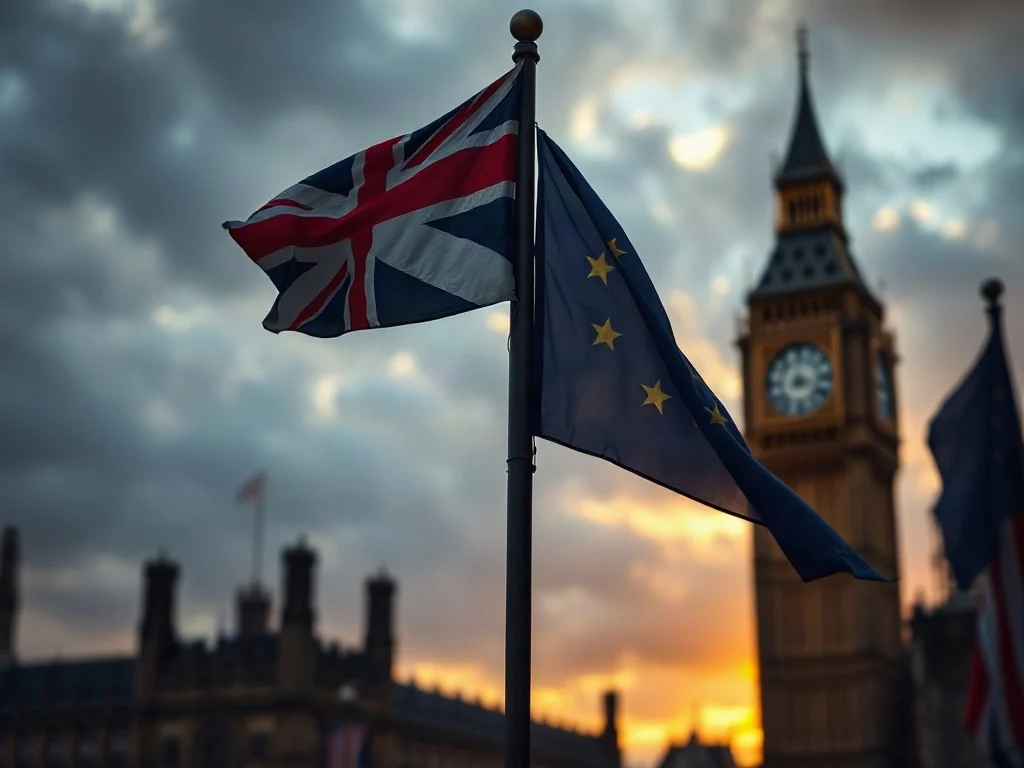
The debate over rejoining the EU has moved from the political fringes to the edge of the mainstream. This week, Oliver Lewis, a former Brexit negotiator and now chair of the Stay Out campaign, appeared on The Guido Fawkes Show to take on Labour’s EU ‘reset’. According to the programme’s billing, he warned that returning to the bloc would mean ‘ten years of hell’. It is a vivid phrase, but is it a sober forecast or a campaign slogan? This article separates what is known from what is argued, and explains why the choice is far more complicated than a simple yes or no.
Why the ‘Ten Years of Hell’ Warning Matters Now
The remark came during a broadcast on Guido Fawkes, the political blog founded by Paul Staines. The same episode also mocked a social media stunt by Foreign Office minister Hamish Falconer. The fuller detail of Lewis’s argument is not set out in the short programme summary, so this article treats ‘ten years of hell’ as a claim to be tested. It does not treat it as an established fact.
The timing is telling. Eight years after the 2016 referendum, in which 51.9% voted Leave on a 72.2% turnout, the question is no longer only about the past. It is about whether a closer relationship with Brussels is a pragmatic repair job or the first step on a road back to membership.
Background: From Referendum to the Labour ‘Reset’
Brexit formally took effect on 31 January 2020. The UK then left the single market and customs union at the end of the transition period on 31 December 2020. The terms of the divorce sit in the Brexit withdrawal agreement. Future trade is governed by the EU-UK Trade and Cooperation Agreement, which was applied provisionally from 1 January 2021.
When Keir Starmer led the Labour Party to government in July 2024, he promised to ‘reset’ relations with the European Union. The UK-EU summit of 19 May 2025 produced a joint ‘common understanding’. It covered a deal on food and farming checks, linking carbon markets, a security and defence partnership, extended fishing access and talks on a youth experience scheme. Starmer has repeatedly said the government will not take the UK back into the single market or customs union, or restore free movement.
Labour EU Reset: Pragmatism or Backdoor Rejoin?
What the reset actually covers
The Labour EU reset is deliberately technical. The most consequential element is an agreement on sanitary and phytosanitary rules. If it is concluded, it would reduce border checks on agricultural and food products by aligning UK rules with EU standards. Linking the UK and EU emissions trading systems would, in principle, avoid carbon border charges. The summit also extended EU fishing access to UK waters to 2038, which attracted fierce criticism from some in the fishing sector.
The ‘rule-taker’ objection
Here lies the heart of the Stay Out critique. Dynamic alignment with EU rules means the UK would follow laws it no longer helps write. It would also remain under the influence of the Court of Justice of the European Union on relevant questions. Opponents call this membership without a vote. Supporters of the reset reply that it is a trade-off: smoother trade in exchange for limited sovereignty on specific issues. Both descriptions are partly true, and the real question is where the balance falls.
The reset is judged by one test above all: does it reduce friction at the border, or does it simply move the point at which Britain accepts rules made elsewhere?
Can the UK Rejoin the EU? The Legal Route
The legal process is clear even if the politics are not. A former member must apply under Article 49 of the Treaty on European Union. Article 50 governs only withdrawal, and its text explicitly says a state that has left may ask to rejoin under the accession procedure. The applicant must meet the Copenhagen criteria and accept the full body of EU law. Every existing member state must then agree unanimously. The wider process is described in the article on the enlargement of the European Union.
The European Commission publishes the official framework for candidate countries on its website. There is no fast track, and the UK has no entitlement to its former terms.
What Would Rejoining the EU Mean for the UK?
This is the question behind the ‘ten years of hell’ claim. Many of the likely costs follow from the accession rules, but the precise terms would be negotiated and cannot be known in advance.
The lost opt-outs and the rebate
The UK once enjoyed exemptions that no new entrant would find easy to obtain. The UK rebate, won by Margaret Thatcher in the 1980s, ended with Brexit. The UK stayed out of the Schengen Area and the eurozone. Current accession treaties generally commit new members to eventual euro adoption once they meet the criteria. It is reasonable to predict that Brussels would resist reopening those exceptions, although that is a judgement and not a certainty.
Free movement and the single market
Membership means the four freedoms, including free movement of people. It also brings the European single market and the customs union. The customs union would constrain an independent trade policy. These are precisely the red lines the current government says it will not cross.
The potential benefits
An honest assessment also acknowledges the case for rejoining. Frictionless trade with the UK’s largest trading partner, a vote on the rules, and restored programmes such as Erasmus are the strongest arguments. Many economists, including the Office for Budget Responsibility, have projected that Brexit reduces long-run UK productivity. That assessment rests on models and assumptions, and it is contested by some Leave-supporting economists.
Oliver Lewis and the Stay Out Case
Lewis speaks from direct experience of the negotiating table, which gives his warnings weight with Leave voters. His argument, as summarised by the programme, is that reversing Brexit would be punishing, not liberating. The case rests on three foundations:
- Weakened bargaining position: a country that has declared its wish to join has little leverage over terms.
- Prolonged transition: alignment, budget contributions and institutional reintegration would take years to unwind.
- Democratic legitimacy: the 2016 result would be set aside without the issue being put clearly to voters.
Critics reply that ‘ten years of hell’ is an assertion without a published model. They also point out that the transition from membership to the current arrangement was itself disruptive. The truth is that neither side can offer a precise forecast, because the terms of any return remain hypothetical.
The Domestic Politics Complicating Everything
Public opinion on reversing Brexit has shifted in polls since 2016. Support for rejoining has often exceeded support for staying out, though results vary by pollster and question wording. Salience matters as much as sentiment. The cost of living, public services and immigration dominate voters’ priorities, and Reform UK under Nigel Farage has made any hint of rapprochement a political liability for Labour. That is why the government frames the reset as practical economics, never as a first step towards membership.
Northern Ireland adds a further layer. The post-Brexit trading arrangements under the Windsor Framework already keep part of the UK within EU rules for goods, so any wider alignment has consequences there too.
Practical Guidance for Businesses and Readers
Whatever the outcome, organisations should avoid betting on a single scenario. Sensible steps include the following:
- Track the SPS negotiations, because they will determine whether food and agricultural exporters face fewer checks.
- Map your regulatory exposure to EU standards, since alignment may arrive sector by sector.
- Scenario-plan for three paths: the status quo, deeper alignment and full accession.
- Read primary sources such as official summit texts, not only campaign summaries.
The most common mistake is to treat ‘reset’, ‘alignment’ and ‘rejoining’ as the same thing. They have very different legal and economic implications.
Frequently Asked Questions
Can the UK rejoin the EU?
Yes, legally. Under the accession procedure the UK would need to apply, meet the membership criteria and secure unanimous approval from all member states. Neither major UK party currently proposes it.
Is the Labour EU reset the same as rejoining?
No. The reset seeks specific agreements on trade, security and cooperation. The government has ruled out rejoining the single market, the customs union or free movement.
Who is Oliver Lewis?
He is a former Brexit negotiator who chairs the Stay Out campaign, which opposes reversing Brexit.
What would the UK lose by rejoining?
Its former rebate is already gone, and past opt-outs might not be restored. In exchange it would gain a vote on EU rules and closer trade ties. The balance is a political judgement.
The Question That Will Decide the Next Decade
The sharpest insight from this debate is that ‘ten years of hell’ and ‘ten years of recovery’ describe the same hypothetical, seen through opposite assumptions. Neither can be verified because no one knows what Brussels would demand, what Parliament would accept or what voters would endorse.
Watch three signals next. First, whether the food and farming agreement is concluded and what alignment it requires. Second, whether any major party moves from ‘reset’ language towards a manifesto commitment on membership. Third, whether a referendum on the question is ever proposed. The most telling development will be whether cooperation deepens step by step until the question of membership is quietly settled in practice. If that happens, the real fight will not be over rejoining on a single day, but over whether Britain has already drifted back without a vote.
Frequently Asked Questions
Is 'ten years of hell' a detailed forecast or a campaign slogan?
The programme summary does not set out the reasoning behind Lewis's phrase, so it cannot be verified as a forecast. Until he publishes specific arguments or evidence, it is best read as a campaign claim to be tested, not an established fact.
Does the Labour EU reset mean the UK is rejoining the single market?
No. The reset covers technical areas: food and farming checks, carbon market linking, security cooperation, fishing access and a possible youth scheme. Starmer has repeatedly ruled out rejoining the single market or customs union, or restoring free movement, although critics say alignment could still blur those lines.
Why do critics call the reset 'membership without a vote'?
Under dynamic alignment, the UK would follow EU rules on certain issues, such as food standards, without helping to write them. It would also be influenced by the Court of Justice of the European Union on relevant questions. Supporters call this a limited trade-off for smoother trade.
What is the legal process for the UK to rejoin the EU?
A former member applies under Article 49 of the Treaty on European Union. Article 50 explicitly allows a departed state to ask to rejoin through this route. The UK would need to meet the Copenhagen criteria, accept the full body of EU law, and win unanimous approval from every member state.
Would an agreement on food and farming rules really reduce border checks?
If concluded, a sanitary and phytosanitary agreement would align UK rules with EU standards and so reduce checks on agricultural and food products. The article stresses the key test: whether it truly cuts friction, or only shifts the point where Britain accepts rules made elsewhere.
Why is the fishing access deal so controversial?
The May 2025 summit extended EU fishing access to UK waters to 2038. Some in the fishing sector criticised this fiercely, arguing it gives up a benefit they expected from Brexit, which shows that even a technical reset involves politically sensitive trade-offs.