
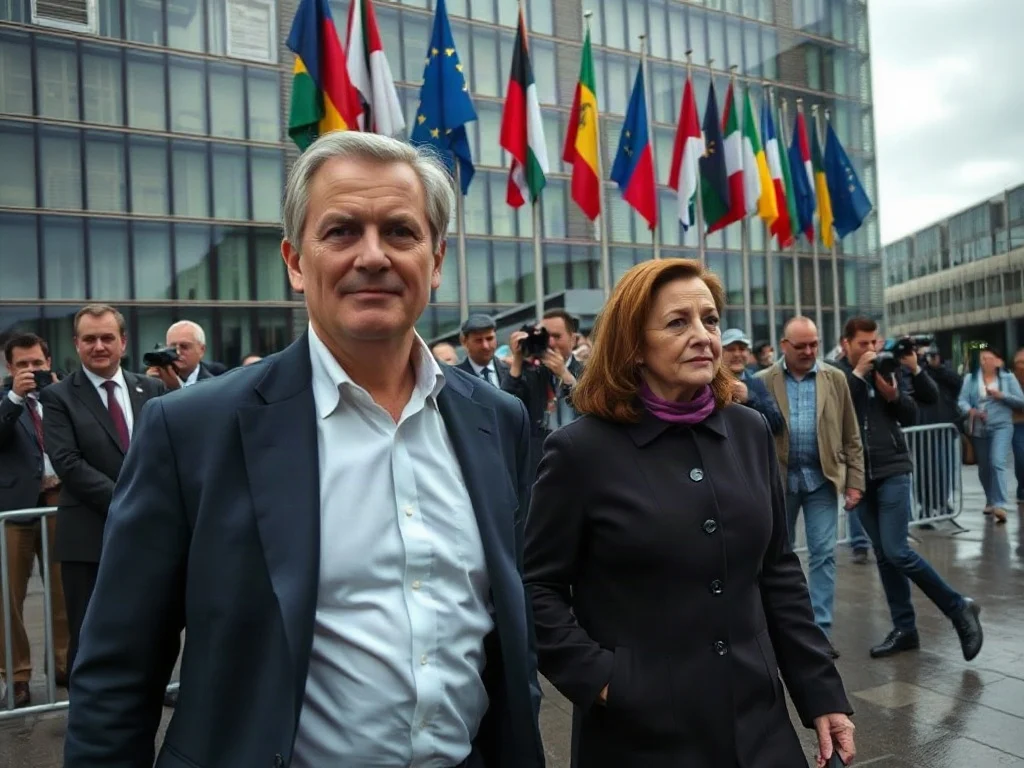
Meghan’s first public appearance since her father’s arrest took place in Brussels, where she arrived at the European Parliament with her husband, Prince Harry. Harry delivered a speech on online child safety. The moment is useful to study because two narratives collided: a private family crisis and a public policy campaign. How they interacted says a good deal about modern celebrity advocacy, and about whether that advocacy changes anything.
This analysis separates what the report establishes from what it does not. It then examines the policy terrain Harry stepped into and offers a critical view of what such appearances can and cannot achieve.
What the Report Actually Establishes
The available report is brief. It states three things: Meghan arrived at the European Parliament in Brussels; she was accompanied by Prince Harry; and Harry gave a speech about online child safety. It also frames the visit as her first public outing since her father’s arrest.
It does not, in the portion available here, give the circumstances of the arrest, any charges, or any statement from the couple about it. Any commentary should respect that gap. Thomas Markle has long been a public figure in the Sussex story because of the estrangement between him and his daughter. That history is documented, but it does not substitute for verified facts about a specific arrest. Readers should wait for confirmed reporting before drawing conclusions.
Background: Why Brussels and Why Child Safety
The Sussexes’ Evolving Public Role
Since stepping back from senior royal duties, an episode popularly labelled Megxit, the couple have rebuilt their public identity around philanthropy, media and advocacy. Their vehicle is the Archewell Foundation, which has publicly emphasised digital wellbeing and online safety among its priorities. Harry’s earlier work with the Invictus Games showed he understands how to turn a personal platform into a sustained cause. Online child safety is a logical next stage, with a ready audience of parents and legislators.
Why the European Parliament Matters
The European Union is one of the few jurisdictions able to impose binding obligations on global platforms. The Digital Services Act already requires large online platforms to assess and mitigate systemic risks, and it contains provisions on protecting minors. The Parliament is also where political pressure on the next generation of rules is shaped. A speech there is not ceremonial. It is lobbying carried out in public view. Readers who want the institutional detail can consult the official European Parliament website.
The Optics Problem: Two Stories in One Frame
From a communications standpoint, the timing is difficult. A first outing after a family legal matter invites the press to read faces and body language rather than listen to the speech. For a cause that depends on sober policy argument, that is a real cost.
The couple’s long dispute with the British press makes this dynamic familiar. The tabloid journalism ecosystem and the paparazzi culture around them are central themes in Harry’s memoir Spare. There is an irony here. A campaigner against online harms is judged largely through attention-driven media, the same economy that rewards intrusion over substance.
The core tension: the more a campaign depends on a famous face, the more its message is hostage to the news cycle surrounding that face.
This is an interpretation, not a reported fact. But it explains why the headline here is about Meghan’s attendance rather than Harry’s argument.
The Policy Substance Behind the Speech
The report does not summarise the content of Harry’s remarks, so this section describes the policy landscape any such speech would address, not what he said.
The Harms in Question
Online child safety covers distinct problems that are often blurred together:
- Child grooming: adults building trust with minors for exploitation, often through messaging features.
- Sextortion: coercion using intimate images, which law enforcement agencies in several countries have flagged as a growing threat to teenagers.
- Child sexual abuse material: illegal content whose detection raises sharp debates about encryption and scanning.
- Design-driven harm: features such as infinite scroll and engagement-optimised feeds, tied to recommender systems.
Each requires a different remedy. Grooming and sextortion point to reporting tools and default privacy settings. Abuse imagery points to content moderation and detection technology. Design harms point to regulation of the product itself. A speech that treats them as one problem risks recommending solutions that fit none of them well.
Comparing Regulatory Models
| Approach | Example | Main strength | Main criticism |
|---|---|---|---|
| Systemic risk duties on platforms | EU Digital Services Act | Targets platform design and scale | Enforcement is slow and resource-heavy |
| Duty of care with regulator oversight | UK Online Safety Act 2023 | Clear legal duties on services | Privacy and free-expression concerns |
| Consent and data rules for minors | US COPPA | Narrow and well defined | Limited to data collection, not wider harms |
The contested point across all three is age assurance. Verifying that a user is a child, without building a surveillance system for every adult, remains technically and politically unresolved. Privacy advocates and child-protection groups disagree sharply, and a celebrity speech does not settle that disagreement.
A Critical Assessment of Celebrity Advocacy
What It Does Well
Famous advocates convert technical regulation into a story that lawmakers and the public notice. Whistleblower testimony, such as that of Frances Haugen, has shown that attention can shift legislative agendas when paired with credible evidence. Harry’s profile guarantees cameras, and cameras can compel officials to respond.
Where It Falls Short
- Credibility gap: Harry is not a technologist, regulator or child-safety researcher. His authority rests on personal narrative and parenthood, which moves audiences but does not substitute for evidence.
- Polarisation risk: Associating a nonpartisan cause with a divisive public couple can alienate potential allies.
- Accountability: Advocacy without measurable commitments is easy to praise and hard to evaluate.
The strongest version of this campaign would pair the platform with named survivors, parent groups and researchers who can answer technical questions. Whether that happened in Brussels is not stated in the available report.
What Informed Readers Should Evaluate
- Specificity of asks. Did the speech call for concrete measures, such as safer defaults for minors or independent audits, or only for awareness?
- Evidence cited. Credible advocacy points to regulator findings, academic studies and official data, not anecdotes alone.
- Institutional follow-through. Watch for committee hearings, parliamentary questions or written proposals after the event.
- Funding and independence. Check how any foundation involved discloses its partners and platform relationships.
- Separation of stories. Judge the policy argument on its merits, independent of the family news around the visit.
Frequently Asked Questions
Why did Prince Harry speak at the European Parliament?
According to the report, he delivered a speech about online child safety. The European Parliament co-legislates EU digital rules, so it is a logical forum for anyone seeking to influence them. The report does not detail his specific proposals.
Was this Meghan’s first public appearance since her father was arrested?
Yes, that is how the report describes it. The available text gives no further detail on the arrest, so it should not be treated as confirming any specific allegation or outcome.
What is online child safety regulation in the EU?
It is a body of rules, led by the Digital Services Act, that obliges platforms to manage risks to users, including minors. Additional proposals on tackling abuse imagery and on age limits have been debated in EU institutions, and their status changes over time, so readers should check current official sources.
Can celebrity advocacy change tech policy?
It can raise visibility and speed up political attention, but binding change usually depends on legislators, regulators, research evidence and sustained pressure from affected families and civil society.
The Test Is What Brussels Does After the Cameras Leave
The most important insight from this episode is structural. Meghan’s presence made the visit a headline. Harry’s speech made it a policy event. Only follow-up will determine whether it was anything more than a photo opportunity. The measurable outcomes are few and checkable: whether lawmakers cite the speech, whether named proposals gain momentum, and whether platforms alter default protections for minors.
Expect the family story to keep competing with the policy story. If further facts about the arrest emerge, coverage will drift further from child safety, which is the cost of tying a serious cause to a celebrity brand. The unanswered question is whether the Sussexes can build advocacy that survives their own news cycle. If Archewell’s work becomes tied to evidence, partners and public commitments rather than appearances, the Brussels visit could be remembered as a starting point. If not, it will be remembered mainly as a first appearance.
Frequently Asked Questions
What does the report actually confirm about Meghan's appearance in Brussels?
Only three things: Meghan arrived at the European Parliament, Prince Harry accompanied her, and he delivered a speech on online child safety. The report calls it her first public outing since her father's arrest, but gives no details on the arrest, charges or any statement from the couple.
Why did Harry choose the European Parliament for a speech on child safety?
The EU is one of the few jurisdictions able to impose binding obligations on global platforms. Its Digital Services Act already requires large platforms to mitigate systemic risks, including to minors, and Parliament shapes the next rules. The article therefore describes the speech as public lobbying, not a ceremonial gesture.
Does the article say what Harry actually said in his speech?
No. The report does not summarise his remarks, so the article only describes the policy landscape such a speech would address, including grooming and sextortion. Readers wanting his exact arguments should look for the full text or a verified transcript of the speech.
How can a family crisis undermine a policy campaign?
Press attention may focus on faces and body language rather than the argument. The article calls this the core tension: the more a campaign relies on a famous face, the more its message depends on the news cycle around that person. It presents this as interpretation, not reported fact.
Is there an irony in Harry campaigning against online harms?
The article sees one. Harry criticises tabloid intrusion in his memoir Spare, yet his advocacy is judged through the same attention-driven media economy, which tends to reward intrusion over substance. That makes serious policy messaging harder to get across.
Should readers draw conclusions about Thomas Markle's arrest from this story?
No. The article notes that the long estrangement between Thomas Markle and his daughter is documented, but it does not replace verified facts about a specific arrest. It advises waiting for confirmed reporting before drawing any conclusions.