
When a politician who backed Remain in 2016 says he would not now vote to rejoin the EU, the remark carries more weight than a routine Westminster soundbite. That is the significance of Jeremy Hunt on Brexit. The former Chancellor appeared on The Guido Fawkes Show, the weekly programme hosted by Adam, Max and Ross, to react to a Budget and to explain why he would not vote to return to the European Union, even though he voted Remain. This article looks at what is publicly known about the interview, the political and economic context around it, and why the position of a prominent ex-Chancellor matters to the rejoin debate.
One caveat first. The published description of the interview is short, so this analysis does not put detailed arguments into Hunt’s mouth. Where it moves beyond the description, it is explaining the context or offering interpretation, and it says so.
What We Know About the Interview
According to the programme description, Jeremy Hunt joined the hosts to react to a Budget the description attributes to John Healey, and to explain why he would not vote to rejoin the EU. The show airs live on X and YouTube every Wednesday at 5pm. It is produced by the team behind the blog founded by Paul Staines, known as Guido Fawkes. John Healey is better known as a Labour frontbencher than as a Budget-setter, and the Budget is normally delivered by the Chancellor, currently Rachel Reeves. Readers should treat that detail of the description with caution.
The headline claim is clear. Hunt was a Remain voter in 2016, and he now says he would not vote to rejoin. That is a three-part story: where he started, where he is now, and the politics of the gap between them.
Jeremy Hunt on Brexit: From Remain Voter to Reluctant Realist
The 2016 starting point
The 2016 referendum on 23 June ended in a 51.9% to 48.1% win for Leave on a turnout of about 72%. Hunt was then Health Secretary under David Cameron and sat with the government side that backed Remain through Britain Stronger in Europe, against the Vote Leave campaign. After the result he, like many Conservative Remainers, accepted the outcome and moved to delivering it. During the 2019 Conservative leadership contest he presented himself as someone who would deliver Brexit as a matter of democratic duty.
Why the ‘former Remainer’ label matters
Politicians who have changed their minds on Brexit are not rare, but they split into two groups. Some Remainers became enthusiasts for the new arrangements. Others stayed sceptical of the project but opposed relitigating it. Hunt’s stated position, that he would not vote to rejoin, sits in the second group on its face, though the short description does not tell us which. The distinction matters. Acceptance of a settled result is a different claim from a belief that leaving was right.
The Economic Case: What the Evidence Says
Anyone who held the office of Chancellor of the Exchequer has seen the fiscal numbers closely, so Hunt’s view deserves attention. It also has to be tested against the evidence.
The Office for Budget Responsibility has published its assessment of Brexit’s economic effects. Its analysis assumes the trade deal reduces long-run productivity by about 4% relative to remaining in the EU, driven by lower trade intensity. You can read the methodology on the OBR’s Brexit analysis page. That is an official forecast assumption, not a measured outcome, and independent economists disagree about the size of the effect and how to isolate it from the pandemic and the energy shock.
The honest summary is that most mainstream economic assessments point to a negative effect on trade and productivity, and the disagreement is about magnitude. A politician can accept that and still oppose rejoining, because the costs of reversing the decision are a separate question from the costs of the original decision.
Why Someone Might Oppose Rejoining Without Defending Brexit
The following is interpretation, not a report of what Hunt said. There are several coherent reasons a former Remainer might not vote to rejoin.
Terms of re-entry
The UK left with a rebate, opt-outs and a strong negotiating hand as a large net contributor. A new application would probably bring fewer concessions. Joining anew would raise the question of whether the UK would be expected to commit to the euro and to Schengen membership, though accession terms would be negotiated and nothing here is certain.
Political cost and national division
A second referendum, or a rejoin policy, would reopen a fight that took the UK years to get through. Many politicians across parties believe that the cost in trust and parliamentary time outweighs the gain. Others argue that the democratic mandate of 2016 is not permanent.
Incremental alternatives
There is a middle path: improve the existing relationship without rejoining. The EU-UK Trade and Cooperation Agreement has review mechanisms, and the Windsor Framework showed that specific frictions, in that case in Northern Ireland, can be negotiated down. Cooperation on food standards, defence and youth mobility, including schemes like Erasmus, can proceed without membership.
The Political Landscape: Rejoin Is Not on the Table
Hunt’s position fits the current mood among the main parties. Labour leader Keir Starmer has repeatedly ruled out rejoining the single market and the customs union, preferring what his government calls a reset of relations. The Conservative Party is clearly opposed to rejoining, and Reform UK built much of its identity on the Leave cause.
The paradox of British politics is that polls have often shown more voters thinking Brexit was a mistake than a success, yet no major party is campaigning to reverse it.
That tension explains why a statement like Hunt’s draws attention. Regret about the past and appetite for another upheaval are different things, and politicians watching the polls know it. Survey results vary by pollster and wording, so any single number should be read carefully.
Why Interviews Like This Matter
The credibility of the messenger
A Leave campaigner saying he would not rejoin is unsurprising. A former Remainer and former Chancellor saying it is a different signal, because it suggests that even people unconvinced by Brexit at the time see re-entry as impractical or unwise. It is also useful to the party, since it lets the Conservatives present opposition to rejoining as pragmatism rather than ideology.
The medium as part of the message
The programme is a new-media format streamed on YouTube and X, aimed at politically engaged viewers who share clips widely. A politician who says something quotable on such a show can shape the next day’s discussion as much as a broadcast interview. Short clips, though, strip out nuance, and the line between ‘I wouldn’t vote to rejoin’ and ‘Brexit was right’ can disappear in a headline.
How to Read a Politician’s Brexit Position
Readers who want to judge statements like this one can use a simple checklist:
- Separate the past from the future. Ask whether the speaker is defending the 2016 decision or only opposing a reversal.
- Look for the alternative. A rejection of rejoining is more meaningful if it comes with a plan for improving trade, such as regulatory alignment or mutual recognition.
- Check the incentives. Party positioning, leadership ambitions and audience all shape what is said.
- Use primary data. The OBR, the Office for National Statistics and the Bank of England publish analysis that can be checked against claims.
- Watch the wording. ‘I wouldn’t vote to rejoin’ is a statement about a hypothetical vote, not about whether Brexit has delivered.
What Could Change Next
Several developments will test whether the no-rejoin consensus holds. The first is the review of the trade agreement, which could widen or narrow the UK’s practical alignment with EU rules. The second is the economic record. If the OBR’s assumptions prove too pessimistic, the case for rejoining weakens. If trade and productivity stay weak, it strengthens. The third is generational: younger voters, who overwhelmingly backed Remain in 2016, make up a growing share of the electorate, and the Leave-leaning older cohort is shrinking. None of this guarantees a rejoin movement, but it shapes the long-term terrain.
It is reasonable to predict that rejoining will stay off the manifestos of the biggest parties for at least this parliament. That is a prediction, not a fact, and it depends on events nobody can forecast: a recession, a change in EU politics, or a shock to the UK’s security situation.
The Question Behind the Headline
The most important insight from Hunt’s remarks is not about the EU itself. It is that Brexit has become a settled constraint in British politics even for those who did not choose it. When a former Remainer and former Chancellor says he would not vote to go back, he is describing how political reality hardens after a decision, whatever the merits of the original choice.
What to watch next is whether this pragmatism produces real gains, or whether it becomes a way of avoiding a hard conversation. If the incremental route of closer cooperation, trade reviews and sector deals delivers measurable benefits, the rejoin question may fade. If it does not, the pressure will build, and politicians who say ‘I wouldn’t vote to rejoin’ will face a harder question: what, then, is the plan to fix what many of them privately admit is a costly arrangement?
FAQ
Did Jeremy Hunt vote Remain in 2016?
According to the programme description, yes. Hunt voted Remain, and he now says he would not vote to rejoin the EU.
Why wouldn’t Jeremy Hunt vote to rejoin the EU?
The short published description does not set out his full reasoning, so the detailed arguments should be taken from the full interview. Common arguments from other politicians against rejoining include less favourable re-entry terms, the political cost of reopening the debate, and a preference for improving the existing trade deal.
Should the UK rejoin the EU?
That is a political judgement. Economic assessments such as the OBR’s suggest Brexit lowers long-run productivity, but whether to rejoin also depends on terms, public consent and political priorities. No major UK party currently proposes rejoining.
What is the economic impact of Brexit on the UK?
The OBR assumes a long-run productivity reduction of about 4% compared with remaining, though economists disagree about the exact size and how to separate it from other shocks.
SEO DATA
Primary Focus Keyphrase: Jeremy Hunt on Brexit
Related Keyphrase 2: rejoin the EU
Related Keyphrase 3: why Jeremy Hunt wouldn’t vote to rejoin the EU
Related Keyphrase 4: should the UK rejoin the EU
Related Keyphrase 5: economic impact of Brexit on the UK
Primary Keyphrase Synonyms: Hunt’s Brexit stance, former Chancellor’s view on Brexit, Hunt’s position on EU membership, ex-Chancellor on leaving the EU, Hunt’s view on rejoining
SEO Title: Jeremy Hunt on Brexit: Why He Wouldn’t Vote to Rejoin the EU
Meta Description: Jeremy Hunt on Brexit: why the former Chancellor, a 2016 Remain voter, says he wouldn’t vote to rejoin the EU, and what it means for UK politics.
URL Slug: jeremy-hunt-on-brexit-rejoin-eu
Image Filename: jeremy-hunt-on-brexit-rejoin-eu-westminster.jpg
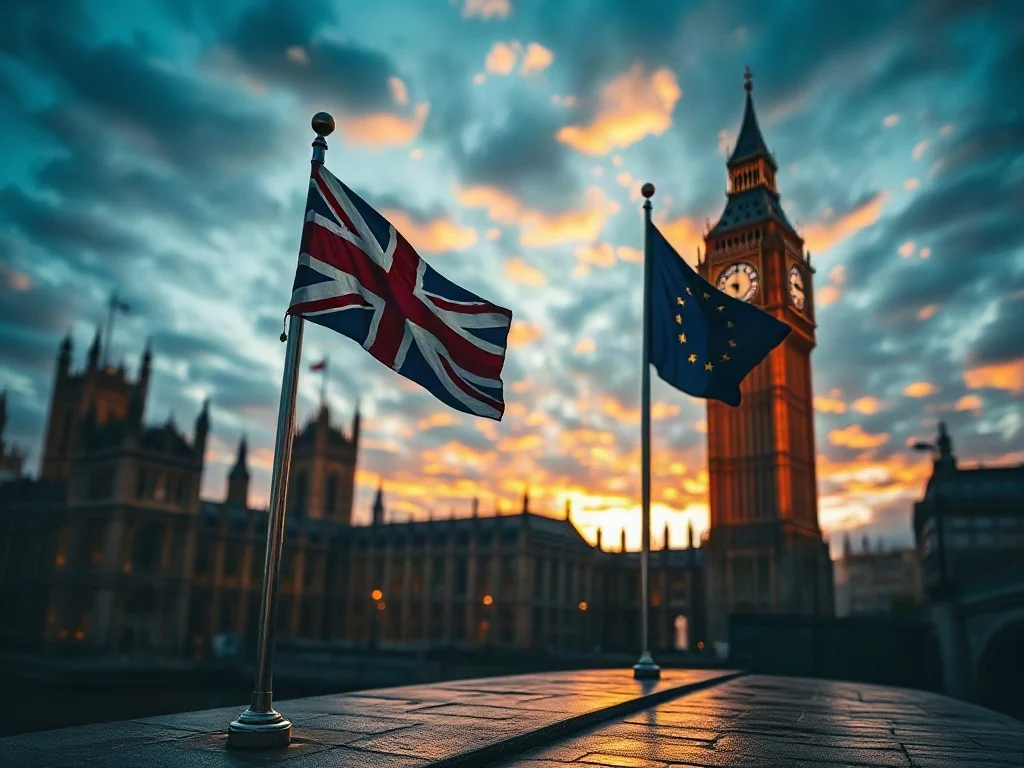
Image ALT Text: Union Jack and European Union flags flying side by side near the Houses of Parliament in London at dusk
Image Title: Brexit and the rejoin debate at Westminster
Image Caption: The debate over rejoining the EU continues at Westminster, even among former Remainers.
Search Intent: Informational (news and analysis)
Internal Link Suggestions: link to site articles on the UK Budget, the UK-EU trade agreement, and the economic impact of Brexit, using descriptive anchor text.