
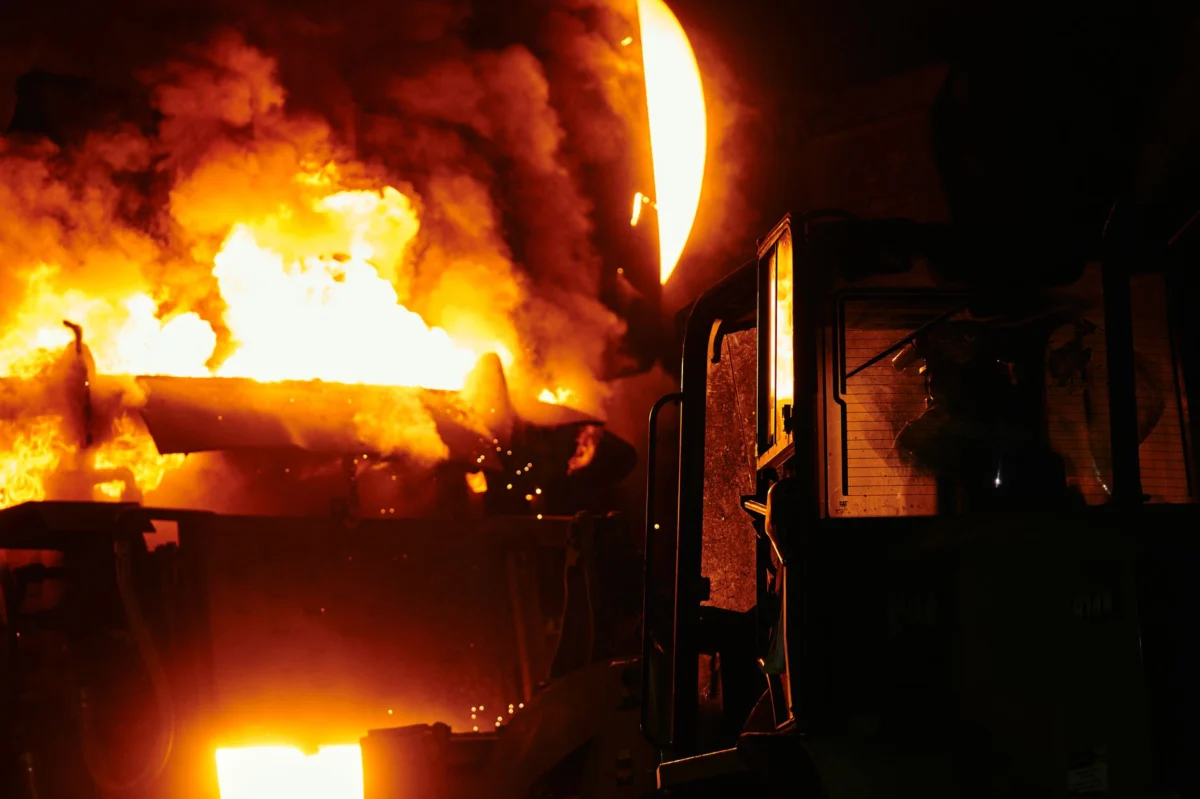
The Quaker Oats factory explosion in Cedar Rapids is the kind of industrial incident that exposes how quickly a routine manufacturing site can become a public-safety emergency. When an explosion is followed by a fast-moving fire inside a large factory, the key question is not only what ignited it but how the building, process line, and suppression systems behaved in the minutes that followed.
Early reports from Cedar Rapids, Iowa, described flames moving through the upper part of the plant, windows blowing out, and evacuations around the site. The facility is tied to the Quaker Oats Company, a legacy name in the U.S. cereal market that depends on the handling of oat and oatmeal products. That matters because food processing plants are not generic warehouses: they are dense industrial systems with heat, motors, conveyors, packaging equipment, dust, and people working in close proximity.
The first mistake in an industrial fire is to assume the blast tells the whole story. In reality, it is usually the final visible symptom of a failure chain that started earlier.
What is confirmed, and what is not
At this stage, restraint matters. A dramatic fire video can make the origin seem obvious, but it usually is not. Reports of heavy smoke, upper-floor flames, and shattered glass describe the scale of the event, not the ignition source. A responsible reading keeps the industrial fire separate from the speculation around cause.
One possibility often raised in plants that handle grain products is a dust explosion. Another is a mechanical or electrical failure that started a fire, which then spread through ducting, equipment galleries, or structural voids. Both are plausible in a food-processing environment; neither should be assumed without evidence. Fine particulates can become combustible dust when suspended in air, but the mere existence of dust does not prove that dust caused this incident.
| Question | What is known now | Why it matters |
|---|---|---|
| What happened? | An explosion and major fire were reported at the plant. | Establishes the event type, but not the cause. |
| Was combustible dust involved? | Not confirmed publicly in the early stage. | Determines whether process controls failed in a predictable way. |
| Were workers evacuated? | Emergency evacuations were reported. | Shows how quickly the hazard exceeded normal operations. |
| Was there structural damage? | Windows were reported shattered and smoke spread across the site. | Helps investigators assess blast pressure and fire spread. |
Why food plants can become explosive in seconds
Food manufacturing is often misread as low-risk because the end product is familiar. In practice, it can be one of the more hazardous segments of manufacturing. Grain handling, flour transfer, storage bins, conveyors, dryers, and packaging stations all generate conditions where heat, friction, static electricity, and particulate buildup interact.
Dust is the hidden variable
The central technical issue is not just dirt or residue. It is dispersion. A layer of dust on a ledge is annoying; a cloud of fine particulate in the right concentration can become fuel. If an ignition source appears, the result can be a rapid pressure event that moves through the plant. That is why regulators and engineers treat OSHA’s combustible dust guidance as baseline reading, not optional paperwork. The NIOSH dust hazard resources make the same point from a prevention angle: control the dust, control the risk.
This is also where generic commentary becomes useless. A headline may describe a blaze as a singular event, but plant fires usually involve multiple failure points. Poor housekeeping, clogged collection systems, worn bearings, overheated motors, and ineffective explosion venting can all contribute. The issue is rarely one defect. It is the accumulation of tolerated defects.
Why the upper floors can be the worst place for a fire to travel
Reports that flames moved through the top of the building are technically important. Upper levels often contain conveyors, ducts, cable runs, and maintenance access points that allow fire and smoke to migrate out of sight before they erupt through windows or roof openings. Once that happens, the incident becomes harder to contain because the fire is no longer confined to a single machine or room; it is attacking the building envelope itself.
That is why the phrase dynamic blaze matters. It suggests movement, pressure, and changing conditions rather than a static pile fire. In a plant environment, that is the difference between a manageable response and a rapidly escalating emergency.
The emergency response is part of the story
In a fast-developing plant incident, the first job is not to explain the cause. It is to protect life. That means alarms, zone isolation, employee accountability, and a clear emergency evacuation plan that works under stress. When windows are blowing out and smoke is visible over the site, the margin for hesitation disappears.
Local fire department crews face a difficult balance: prevent spread to adjacent structures without putting personnel into an unstable interior. Industrial fires are not suburban house fires at larger scale. They can involve hidden voids, hot metal, compromised roofs, and machinery that can reignite after visible flames are knocked down.
For nearby residents, the immediate hazard is often not direct flame but smoke, airborne debris, and traffic disruption. That is why public messaging in events like this must be blunt and fast. The best emergency communication does not try to sound reassuring before it is accurate. It tells people where to go, what to avoid, and when to wait for official updates.
Why this incident is a test of industrial safety, not just crisis PR
Every company in a hazardous sector eventually faces a credibility test. In the days after the event, the question will not be whether the brand is well known. It will be whether the plant had a credible risk management framework and whether that framework was actually enforced. Public statements can buy time, but they do not substitute for engineering controls.
The deeper issue is industrial safety. If the site handled grain dust, then the company and its contractors should be able to show how dust was monitored, how ignition sources were controlled, how collection systems were maintained, and how employees were trained to recognize abnormal conditions. If the incident turns out to involve a mechanical fault, the same standard applies: what failed, why did fail-safes not stop it, and what maintenance evidence exists?
That is also why regulators matter. The Occupational Safety and Health Administration will be relevant if worker exposure, maintenance, or process controls are implicated. State and local investigators will focus on fire origin, structural damage, and evacuation performance. The best outcome is not just a fast rebuild. It is a verified explanation that closes the safety gap rather than burying it.
What investigators should establish before anyone claims to know the cause
The public usually wants a single explanation. Investigators need a sequence. In incidents like this, the right order is mechanical evidence, witness accounts, incident video, sensor data, maintenance logs, and then cause-and-effect analysis. Without that sequence, the story becomes guesswork dressed up as certainty.
- Ignition source: Was it electrical, mechanical, thermal, or process-related?
- Fuel load: Was the fire fed by product dust, packaging, lubricants, or stored materials?
- Propagation path: Did fire move through ducts, overhead spaces, or conveyors?
- Suppression performance: Did alarms, sprinklers, or isolation systems activate as designed?
- Evacuation timing: How quickly were workers moved out of danger?
If those questions are answered carefully, the incident can become a case study instead of a rerun. If they are handled casually, the plant may reopen with the same hidden vulnerability still intact.
What professionals in food manufacturing should be watching now
For plant managers, safety engineers, insurers, and local officials, the practical lesson is immediate. This is the moment to inspect assumptions that are usually left untouched until a disaster forces them into view.
- Audit dust collection and housekeeping practices, especially in elevated or hard-to-see spaces.
- Review ignition control around motors, bearings, dryers, and electrical panels.
- Test whether alarms and evacuation routes are understandable in a noisy production environment.
- Confirm that maintenance records reflect real inspections, not just paperwork compliance.
- Check whether contractors and shift supervisors know how to isolate a line before fire spreads.
These are not abstract best practices. They are the difference between a contained shutdown and a city-block emergency. A plant that processes grain products must behave as if dust is part of the hazard model every single day, because it is.
Frequently asked questions
Was the Quaker Oats factory explosion definitely caused by combustible dust?
No. That has not been publicly confirmed in the early reporting. Dust is a plausible mechanism in a plant like this, but it would be premature to label it the cause without investigator findings.
Why are oat and cereal plants vulnerable to fire?
Because they combine moving machinery, heat, dust, and enclosed structures. Fine particulate from oats and other grains can become hazardous when it accumulates or becomes airborne. The same production efficiency that makes a plant productive can also make fire spread faster.
What should nearby residents do after a large industrial fire?
Follow local emergency instructions, avoid the area, and wait for air-quality or shelter guidance from officials. Do not assume visible flames are the only danger; smoke and debris can remain hazardous after the fire front moves on.
What will regulators likely look at next?
They will usually examine the ignition sequence, maintenance history, employee protection measures, evacuation performance, and whether the site had controls appropriate to its hazard profile. That is where accountability becomes measurable, not rhetorical.
The question that remains is not just what started the fire, but what the plant thought was impossible
The most revealing detail in an industrial disaster is often not the blast itself. It is the assumption behind it: that the system was safe enough, that the dust load was tolerable, that the maintenance gap was minor, that the alarm would buy enough time. In a plant associated with the Quaker Oats Company and situated in a working manufacturing corridor, those assumptions will now be tested against evidence rather than policy language.
What happens next will be more important than the first video clips. If the cause is traced to a preventable hazard, the real story will be whether the company, regulators, and the broader food-processing sector treat it as a local accident or as a warning about overlooked industrial risk. That is the unresolved issue. Not whether a fire happened, but whether the next one can be stopped before it reaches the roof.
Readers should watch for the first formal findings from local investigators, any OSHA involvement, and whether the company releases concrete details about suppression systems, dust control, and plant status. In the coming months, the most useful measure of progress will not be how quickly the headlines fade. It will be whether the industry changes the way it treats the hazards hiding inside ordinary-looking production lines.
Frequently Asked Questions
Why can a cereal or oat plant be at risk of an explosion if it does not handle obvious flammable liquids or gases?
Food plants can still be highly explosive because fine organic dust, heat, friction, static electricity, and mechanical equipment can combine in dangerous ways. In a grain or oat facility, dust may accumulate in conveyors, ducts, and hidden spaces. If it becomes suspended in air and meets an ignition source, the fire can escalate much faster than people expect.
Does a big fire after an explosion mean combustible dust was definitely the cause?
No. A dramatic fire can look like proof of dust involvement, but it is only evidence of a serious incident, not the ignition source. An electrical fault, overheated bearing, mechanical failure, or dust-related event could all produce similar damage. Investigators need physical evidence and system data before assigning a cause.
Why are upper floors or elevated equipment areas often mentioned in industrial fire reports?
Upper levels often contain conveyors, ducting, utility lines, and equipment galleries that can help fire and smoke spread quickly through a plant. They also make access harder for firefighters. If flames reach these areas, they can move through hidden voids and structural spaces before crews fully isolate the source.
What clues will investigators likely use to determine what happened at the Cedar Rapids plant?
They will look at the blast pattern, fire origin points, electrical systems, equipment condition, dust buildup, suppression performance, and any maintenance records or sensor logs. Investigators also examine whether the fire started before the explosion or whether an explosion occurred first and then spread the fire through the building.
What is the broader safety lesson for food processing plants from incidents like this?
The key lesson is that industrial safety depends on preventing small failures from stacking up. Housekeeping, dust control, equipment maintenance, ventilation, and explosion protection all have to work together. A single weak point may not cause a disaster, but several overlooked hazards can turn a routine production area into an emergency very quickly.