
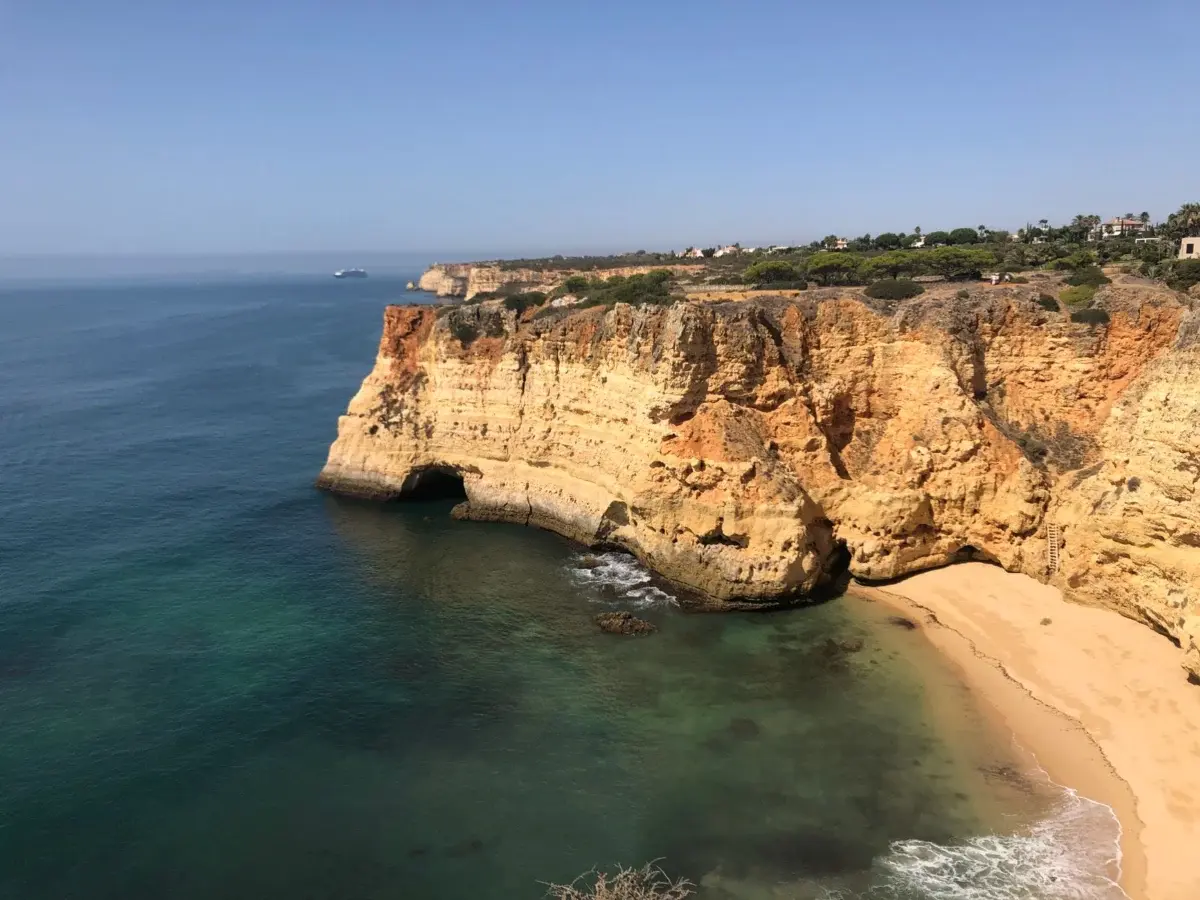
A reported 32ft fall near Amado Beach in the Algarve is a blunt reminder that scenic coastlines are not passive backdrops. They are active, unstable environments shaped by rock fracture, wind, surf, and human traffic. When a 34-year-old holidaymaker is said to have suffered a traumatic head injury after plunging from a cliff edge in Portugal, the story is not just about one accident. It is about cliff fall safety in the Algarve, the limits of visitor judgement, and the burden placed on emergency responders when a holiday landscape turns into a rescue scene.
That matters because the Algarve is marketed as a place of sun, surf, and dramatic scenery. The same cliffs that make its beaches memorable also create a hazard zone. On a coastline facing the Atlantic Ocean, edges can appear solid while quietly failing through weathering and coastal erosion. The risk is not only a misstep. It is the combination of unstable ground, distraction, footwear, alcohol, wind, and poor route choice. That is why simple advice about staying away from the edge is necessary but not sufficient.
Why a cliff-edge fall is never a routine holiday mishap
People often describe falls from cliffs as freak accidents. That framing is too casual. A cliff fall is usually the end result of a chain: a person approaches an edge, underestimates the drop, steps on loose material, loses balance, and then hits rock or rough ground with enough force to cause severe injury. In the language of trauma medicine, the concern is not just impact but secondary injury, delayed treatment, and possible shock. A report of a traumatic head injury should be read as a possible traumatic brain injury, not a superficial scrape.
From a public safety standpoint, that distinction matters. Head injuries are notoriously deceptive. A person may still be awake, speaking, or trying to stand while bleeding internally or developing neurological symptoms. That is why emergency medicine treats falls as high-risk events even before a full examination is possible. The UK’s NHS head injury guidance is consistent with this approach: worsening headache, confusion, vomiting, drowsiness, or loss of consciousness after a fall requires urgent assessment. In other words, the beach is not the place for optimistic self-triage.
The real hazard at cliff beaches is not the edge alone. It is the false confidence created by a place that looks scenic, familiar, and stable right up until it is not.
Why the Algarve produces this kind of risk
The Algarve is not a random setting. Its western and southern shores combine tourism density, rough Atlantic conditions, and cliff-lined beaches that draw hikers, photographers, and surfers alike. Places like Amado Beach are known for surf culture, which is part of the appeal. But a surf beach is also a working edge of geology. The same conditions that make the coast attractive to surfing communities can make access points difficult, slippery, and exposed.
On a map, a cliff looks fixed. On the ground, it is dynamic. The processes of weathering and erosion do not announce themselves to visitors in real time. Small fractures widen. Undercutting weakens ledges. Rain can saturate soil and reduce friction. In some places, coastal retreat eventually ends in collapse or landslide. The result is a terrain that may look safe from a distance but has no obligation to remain stable at close range.
The psychology of the edge
People underestimate cliffs for predictable reasons. First, many coastlines are managed visually, not psychologically: signs, fences, and paths are designed to look orderly, which can create a misleading sense of control. Second, holiday settings reduce vigilance. Visitors move from one scenic point to another, often in beachwear or sandals, and treat the environment as leisure space rather than hazard space. Third, a clifftop view encourages backward steps, selfies, and crowd pressure. None of these behaviours is extraordinary. Together, they raise risk.
This is where Algarve beach safety becomes a design problem, not just a behaviour problem. If a popular location invites people close to an edge, the safest outcome depends on more than individual caution. It depends on signage, barrier placement, path maintenance, multilingual warnings, and the ability of visitors to understand the terrain before they reach it.
What a 32-foot fall means medically
A fall of roughly 32ft is about 10 metres. That is high enough to produce severe trauma even on a surface that looks forgiving. The direct force can cause skull fracture, brain injury, broken limbs, spinal damage, or internal bleeding. A person can also suffer complications from being pinned, disoriented, or exposed to the elements while waiting for help. For this reason, first aid after a cliff fall is not about improvisation. It is about minimising movement, protecting the airway if possible, controlling visible bleeding, and calling for professional help immediately.
The fastest response is often the difference between a serious injury and a catastrophic one. That is why emergency medical services aim to stabilise the scene before transport. On rough coastal terrain, the hard part is access. A stretcher may be difficult to move over sand, rocks, or narrow tracks. In those conditions, a helicopter transfer can be the most practical option, especially if the injured person needs rapid transport to a trauma-capable hospital such as the one at Faro, the main regional city.
Why head injuries demand caution
Head trauma is not measured only by visible damage. A cut may look dramatic while the real concern is hidden swelling, bleeding inside the skull, or impaired consciousness. A patient may seem coherent and still be deteriorating. That is why the combination of a fall and a reported head injury triggers urgency. It is also why bystanders should avoid moving the person unless there is an immediate danger such as falling rocks, fire, or surf.
In practical terms, the correct civilian response is simple: call emergency services, keep the person still, protect the head if possible, and do not let the person walk away because they appear to be talking normally. Good intentions can make the injury worse. That is not alarmism; it is basic trauma management.
Why rescue operations at cliff beaches are structurally difficult
In a beach rescue, the terrain is part of the emergency. Steep access paths, unstable footing, and limited vehicle access can slow every stage of the response. In this case, firefighters were reportedly deployed and the casualty airlifted. That sequence is telling. It points to a coordinated response where ordinary ground access was not enough. Firefighting units are often tasked with rescue work because they have training in rope access, extraction, and scene control, not just fire suppression.
The wider system behind that response is civil protection, which brings together firefighters, medical teams, and local authorities. In an ideal setup, each agency knows the access point, the fastest route, and the likely landing zone for air evacuation. The challenge is that coastal incidents do not wait for perfect conditions. Wind changes. Surf conditions shift. Visitors crowd the area. Meanwhile, the injured person cannot wait for the logistics to become convenient.
| Risk factor | Why it matters | Practical control |
|---|---|---|
| Loose cliff edge | Ground can fail without warning | Stay well back from the edge and obey barriers |
| Wet or sandy footing | Reduces traction and balance | Wear proper footwear and avoid unmarked paths |
| Delayed rescue access | Worsens outcomes after trauma | Know the nearest access point and emergency number |
| False sense of security | People take unnecessary risks for photos or views | Use clear warnings and enforce safe viewing zones |
What a safer cliff beach actually requires
There is a temptation to treat safety as a matter of more signs. That is too shallow. The best approach is layered. First, the site must be mapped for hazards and access routes. Second, warning messages need to be specific, multilingual, and placed before the danger point rather than after it. Third, physical controls should be used where the terrain justifies them. Fourth, local operators and authorities need a clear rescue plan that assumes people will still make mistakes.
This is particularly important in places that depend on tourism. Resorts and local economies want open access, scenic views, and repeat visitors. But a coast that sells itself on dramatic cliffs cannot pretend those cliffs are decorative. They are geological structures exposed to the same forces that shape coastlines worldwide. The tension is not between tourism and safety; it is between smart management and preventable injury.
For visitors: the basics are non-negotiable
- Stay several steps back from any cliff edge, especially if the ground is uneven or sandy.
- Avoid cliff tops after rain, strong wind, or heavy foot traffic.
- Do not climb down unmarked paths for a better photo or a private beach shortcut.
- Keep children and dogs away from the edge at all times.
- Carry a charged phone and know the local emergency number before you leave the accommodation.
- If someone falls, treat it as a medical emergency, not an argument about whether they can walk it off.
For municipalities and beach managers: prevention has to be visible
Beach managers should think like risk engineers, not just hosts. That means placing warning systems where people actually approach the edge, not where officials prefer them to stand. It means understanding circulation patterns at sunrise, sunset, and busy surf periods. It also means reviewing whether existing barriers match the reality of the cliff face. A low post and rope are not enough if people can easily step around them.
At the policy level, authorities should track repeated incidents, near misses, and erosion changes. A beach with a history of falls should not be managed as if the next incident is unforeseeable. The point is not to sanitise the coastline. It is to reduce avoidable exposure while preserving legitimate public access.
Why this event should be read as a coastal systems problem
The Algarve is not unique in facing cliff-edge accidents. Similar risks exist across parts of Europe and beyond wherever cliffs, visitor traffic, and informal access overlap. But the region is a useful case study because it combines spectacular scenery with large seasonal visitor numbers and a strong outdoor recreation culture. The same coast that attracts surfers and walkers also exposes a structural truth: people do not behave like static maps predict.
That makes future risk management more technical than ever. Better drone surveys, updated hazard mapping, and live coastal monitoring can all help. So can smarter digital signage that links to route information and emergency details. Yet technology alone will not solve the issue. The persistent problem is human attention. Holidaymakers often arrive with the expectation that scenery is safe by default. A cliff beach punishes that assumption.
The broader environmental trend is equally important. As erosion continues, margins change. A viewpoint that was safe last season may not be safe now. That uncertainty is why coastal authorities need to treat the shoreline as a changing system rather than a fixed destination. In geography terms, the coast is a process, not a postcard.
Frequently asked questions about cliff fall safety at Algarve beaches
How dangerous are cliff edges at Algarve beaches?
Very dangerous when visitors stand close to the edge, especially on weathered ground or near unofficial paths. The risk increases when the rock is loose, the surface is wet, or people are distracted by photos or views.
What should you do if someone falls from a cliff?
Call emergency services immediately, do not move the injured person unless there is immediate danger, and keep them still until trained help arrives. If the person is conscious, speak calmly and monitor breathing while waiting for first aid professionals.
Is it safe to ignore a minor head injury after a beach fall?
No. A seemingly minor impact can conceal a serious internal injury. Symptoms can worsen over time, which is why urgent evaluation is recommended after a significant fall, especially if there is vomiting, confusion, drowsiness, or loss of consciousness.
Why do rescuers sometimes use helicopters?
Cliff beaches can be hard to reach by road or stretcher. A helicopter can shorten the time to definitive care when ground evacuation is slow or unsafe, provided weather and landing conditions allow it.
What emergency number should visitors use in Portugal?
The emergency number in Portugal is 112. Visitors should save it before heading to remote beaches and should be ready to explain the nearest access point, nearby landmarks, and the nature of the injury.
What this rescue says about the next phase of coastal safety
The most important lesson from this incident is not that cliffs are dangerous, because that is obvious. The real lesson is that scenic coastal spaces are still treated too often as leisure environments first and hazard zones second. That order is backwards. A beach with cliffs, surf, and variable access needs to be understood through the lens of risk management, not tourism branding.
Over the next few years, the best-managed coastal areas will likely combine better hazard mapping, more visible warnings, faster emergency response, and more explicit visitor education. The weaker model is familiar: assume the public will notice the risk, hope the weather stays calm, and trust that rescue access will be enough if something goes wrong. The reported fall near Amado Beach suggests that this second model is not good enough. The unanswered question is whether holiday coastlines can remain open and beautiful while finally being treated as active, changing environments rather than harmless scenery.
Frequently Asked Questions
Why can a cliff edge look safe even when it is unstable?
Cliff edges often fail gradually, not visibly. Weathering, coastal erosion, rain saturation, and undercutting can weaken the ground beneath the surface while the top still looks solid. From a distance, a ledge may appear firm, but loose soil, fractures, and hidden voids can make it collapse with little warning.
What makes head injuries after a cliff fall especially dangerous?
A head injury after a fall can be serious even if the person seems alert at first. Internal bleeding, concussion, or traumatic brain injury may not be obvious immediately. Symptoms such as vomiting, confusion, drowsiness, worsening headache, or loss of consciousness need urgent medical assessment, not just rest at the beach.
Why are surf beaches like Amado Beach not just a risk for swimmers?
Surf beaches often have more than water hazards. They can include steep access paths, loose cliff edges, slippery rocks, wind exposure, and informal viewing spots that encourage people to wander close to danger. The same dramatic scenery that attracts visitors can also create unstable terrain above the shore.
Is staying a few steps back from the edge usually enough protection?
Not always. The safe zone is not always obvious, because the ground may be weakened well beyond the visible edge. Wind, loose material, or a sudden step onto eroded ground can still cause a fall. The safest approach is to use marked paths, barriers, and local warning signs rather than judging distance by eye.
What should bystanders do first if someone falls from a cliff?
Call emergency services immediately and avoid moving the injured person unless there is an immediate danger such as waves or rockfall. If the person is conscious, keep them still and monitor breathing and responsiveness. Falls from height can involve spinal or head injuries, so rushed handling can make things worse.
Does alcohol or distraction really make that much difference on coastal cliffs?
Yes, because cliff accidents often happen through a chain of small mistakes. Alcohol, selfies, phones, poor footwear, or crowd pressure reduce balance and attention at the exact moment when footing matters most. On uneven coastal terrain, even a brief distraction can turn a harmless-looking step into a serious fall.