
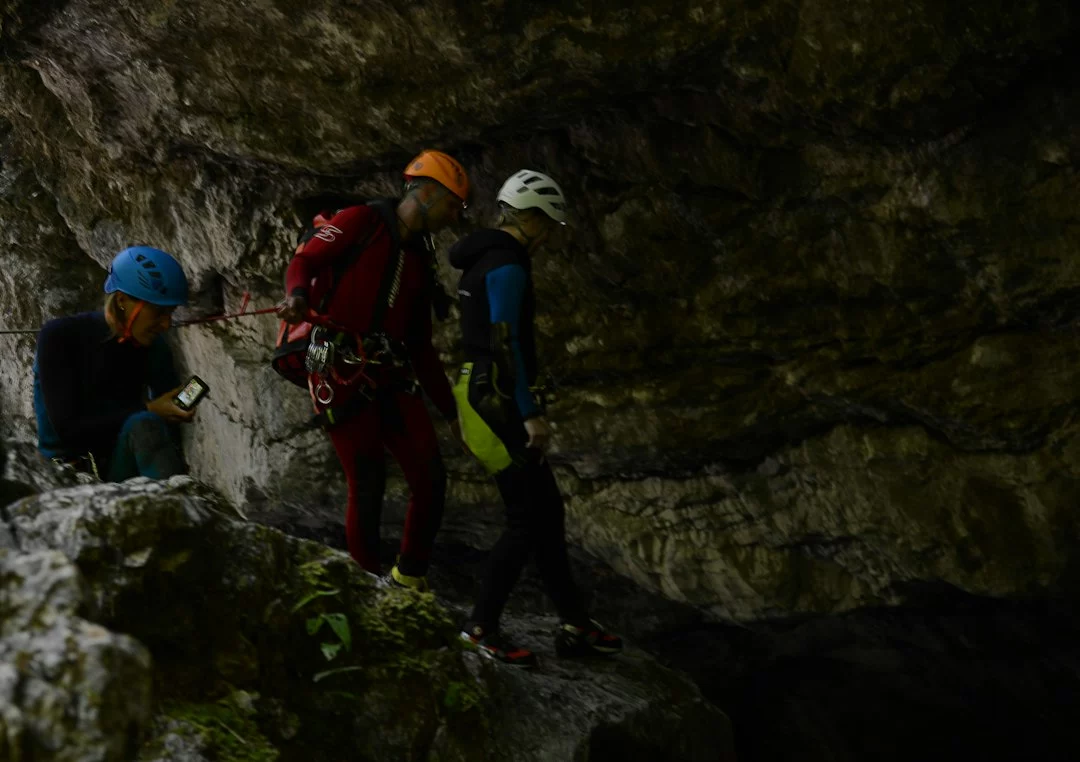
A cave rescue operation in Sardinia is never just a matter of digging faster. When a person is reportedly buried under roughly 32 feet of debris in the Urzulei caves, the real challenge is deciding how to reach the victim without triggering another collapse. That is why underground emergencies demand a different logic from surface search and rescue: the map is incomplete, the floor is unstable, and the air itself can become part of the hazard. In the island of Sardinia, and within Italy‘s emergency response chain, incidents like this force specialists to move carefully between geology, medicine, and engineering. The reported search near Urzulei is a reminder that a cave can become a trap in seconds and a rescue problem for days.
The setting matters. A cave is not an empty room cut into stone; it is part of a geological system that can change after rainfall, vibration, or a small local failure. In rock dissolved over time, especially limestone and other soluble formations, water carves karst terrain full of hidden voids. When a ceiling gives way, a cave-in can bury an entrance in seconds, and a secondary landslide can continue moving after the first impact. The result is not just obstruction; it is a shifting mass of rubble that may still be loading the chamber beneath it.
Why cave collapses are so unforgiving
People often think of underground rescues as a matter of endurance. In reality, the first problem is structural. A cave roof that has failed once can fail again, and every attempt to clear debris changes the stress on nearby rock. That is why rescue planners treat the site as a live hazard rather than a static scene. A collapse does not merely block access; it redefines the entire route geometry, compresses air pockets, and turns even a narrow passage into an uncertain load-bearing system. In practical terms, a seemingly small breakthrough can destabilize the last stable section above the victim.
Specialists in speleology understand this better than most. Cave science is not only about exploration; it is about reading the history of water, fractures, and voids in rock. That knowledge matters because underground emergencies are rarely random. They often happen where the rock has already been weakened by seepage, vibration, or earlier movement that is invisible from the surface. A site that looked solid yesterday can behave differently after a storm or a minor shift underground. The hard lesson is simple: in karst terrain, the ground beneath you is often less fixed than it appears.
In a cave emergency, the main danger is not only distance, but uncertainty. Rescuers have to work through darkness, narrowed passages, dust, noise, and unstable overhead rock while they are still trying to confirm the victim’s exact position.
How a cave rescue operation is actually run
The first instinct of outsiders is to move the debris. Professionals usually do the opposite. A credible cave rescue operation starts with stabilizing access, measuring air, and preserving what remains of the passage. Underground, speed without control can create a second casualty. That is why cave teams often work alongside mountain rescue specialists and emergency medical services, because the scene combines confined-space danger with trauma medicine and logistics.
| Rescue phase | What teams do | Why it matters |
|---|---|---|
| Scene control | Secure the entrance, assess falling rock, and limit unnecessary traffic | Prevents secondary collapse and protects rescuers |
| Air and access checks | Measure airflow, dust, gases, and the stability of the route | Determines whether the team can remain underground safely |
| Victim location | Listen, probe, communicate by voice or line, and narrow the search zone | Finds the trapped person without expanding the collapse zone |
| Stabilization | Shore loose sections and create controlled working space | Makes the route survivable for rescuers and the victim |
| Extraction and handoff | Move the victim through the safest path and transfer to medical care | Turns underground rescue into a medical survival chain |
How cave rescue teams locate buried cavers
How cave rescue teams locate buried cavers is a technical question, not a dramatic one. They do not simply charge toward the last known point. They triangulate sound, inspect mapped voids, use ropes and guide lines, and, where the route permits, deploy cameras or probes to confirm whether the airspace is open. If the victim can respond, voice contact is invaluable. If not, the team may have to infer position from the collapse pattern, the known cave map, and the way the debris has settled. That is why prior surveying matters so much: the more accurate the cave map, the less guesswork rescuers face when time is running out.
Why professional discipline beats improvisation
The best underground teams are disciplined because they know that the wrong shortcut can bury the chance of recovery. In a stable mine or tunnel, there may be engineered supports and structural records. In a natural cave, there is often only field knowledge, experience, and the judgment of people who understand rock. That is why the role of cave rescue specialists matters so much. They do not just move fast; they decide where not to move at all.
The central rule underground is simple: do not create a second emergency while solving the first.
Why 32 feet of debris changes the odds
Thirty-two feet is not just a number. It implies a debris column thick enough to hide voids, shift load onto intact rock, and mask whether a passage remains open above, below, or to the side. In a cave system, each shovel load can alter stress in the roof. That is why rescuers distinguish between a rescue attempt and a recovery operation only when the geology and the medical reality make the distinction unavoidable. Before that point, they focus on preserving options. The deeper the burial, the more likely that extraction requires shoring, widening, rerouting, or bypassing the obvious line of approach.
That is also why the difference between depth and accessibility matters. A victim could be relatively close in map terms and still unreachable because the collapse has sealed the route with unstable rock. The true enemy is not the vertical distance alone; it is the interaction between pressure, debris, and hidden cavities. In other words, the route to the victim can be shorter on paper and far longer in practice.
The medical clock underground
Underground rescues are never just engineering exercises. They are medical races as well. A trapped person can develop hypothermia even when the cave is not freezing, because damp rock conducts heat away from the body. Trauma can bring bleeding, shock, or compression injury. If the victim has been pinned under debris, prolonged pressure may also raise concerns about crush syndrome. The rescue team must therefore think about insulation, pain control, airway safety, and the route out at the same time.
This is where the expertise of emergency medical teams becomes crucial. In a cave, the doctor or medic cannot simply order a patient to move into a waiting ambulance. The extraction path may be narrow, crooked, and unstable. Treatment is therefore adapted to the terrain: oxygen if available, thermal protection, gentle handling, and a conservative approach to movement until the debris field is secure. The victim’s condition can deteriorate long before the team reaches daylight.
What the Urzulei setting suggests about underground risk
The Urzulei area is part of a landscape where caves are not anomalies; they are part of the terrain. That matters because repeated use of the same cave systems can create a false sense of familiarity. Explorers may know the main route but not the changing stability of the roof, especially in wetter periods. For that reason, local knowledge is valuable but not sufficient. Every cave collapse forces rescuers to treat even well-known ground as if it were newly discovered.
That is also why these incidents are so sensitive in Italy, where specialist underground rescue capabilities exist but must still work within the constraints of geology and access. The more remote the cave, the longer it takes to move people, tools, power, and medical support into position. A dramatic headline may focus on the trapped individual; the rescue team is also fighting distance, logistics, and the slow physics of stone.
Frequently asked questions about cave collapse rescue
What happens when a cave collapses?
When a cave collapses, rescuers first secure the entrance and assess whether the collapse is still active. They then measure air quality, identify the safest route, and determine whether the victim can be contacted. The priority is always to avoid creating another failure while trying to clear the first one.
Can rescuers dig straight to the victim?
Usually not. Digging straight toward the last known location can destabilize the roof or send more debris into the void. Teams prefer controlled access, shoring, and route planning based on the cave map and the collapse pattern. Direct digging may be the slowest-looking option, but it is often the safest one.
Why is Sardinia vulnerable to cave-related emergencies?
Sardinia has extensive karst landscapes and limestone formations that create natural cave systems. Those systems are scientifically fascinating, but they also contain hidden fractures and voids that can fail without obvious warning. That combination makes careful planning essential for anyone entering the underground environment.
How long can someone survive under rubble?
There is no reliable universal timer. Survival depends on whether the airway is open, whether the person is pinned, body temperature, injury severity, and the stability of the debris. A trapped person might remain alive for a long period or deteriorate quickly. That uncertainty is why immediate specialist response matters.
What should bystanders do during a cave collapse?
They should call emergency services, keep the entrance clear, avoid entering the unstable area, and share precise information about the last known location and any cave map available. Amateur digging can worsen the collapse and remove clues that trained rescuers need.
What this rescue will reveal next
The most important insight is that underground rescues are judged long before the final extraction. They are judged by how well teams can read the cave, control the debris, and protect the route from becoming worse. That is why the outcome in Sardinia will matter beyond one incident. It will test the quality of local cave knowledge, the speed of interagency coordination, and the practical value of specialist search and rescue training in a real collapse.
What to watch next is the balance between prevention and response. Better mapping, stronger monitoring, and more disciplined access rules can reduce the number of emergencies before they start. Future cave rescue tools will likely include more compact scanning devices, better underground communications, and faster environmental sensors. But technology will not replace judgment. The real question is whether explorers, local authorities, and rescue planners treat caves as dynamic risks rather than scenic curiosities. If they do not, the next cave collapse rescue will be another test of how much uncertainty humans can survive underground.
Frequently Asked Questions
Why don’t rescuers simply dig straight to the victim in a cave collapse?
Because digging can destabilize the remaining roof and trigger a second collapse. In underground rescues, the main risk is not just distance but the changing load on fractured rock. Teams first assess stability, airflow, and debris movement so they can create a safe route instead of turning one trapped person into multiple victims.
What makes karst caves in Sardinia especially dangerous after a collapse?
Karst terrain is formed by water dissolving rock, often limestone, leaving hidden voids and weakened layers. That means the ground can look solid while actually resting over empty spaces or fragile supports. After rain, vibration, or a minor shift, a section that seemed stable may fail again, making collapses harder to predict and contain.
How do rescue teams find someone when the passage is blocked by debris?
They usually combine listening, voice contact, probing, and line-based mapping to narrow the search area without disturbing the rubble too much. In a cave, the exact location may be uncertain, and every move can change the structure. The goal is to confirm position while keeping the collapse zone as stable as possible.
Why is air quality such a big concern in an underground rescue?
A cave is a confined space where dust, low oxygen, and trapped gases can build up quickly. Even if the victim is reachable, poor airflow can make both rescue and survival difficult. Measuring air conditions helps teams decide whether they can enter safely, how long they can stay, and what protective measures are needed.
What happens after the victim is reached in a cave rescue operation?
Reaching the victim is only the beginning. Rescuers must stabilize the area, move the person through the safest available path, and then hand them over to medical teams. Because underground trauma may involve crushing injuries, hypothermia, or breathing problems, extraction and medical transfer have to be coordinated carefully.