
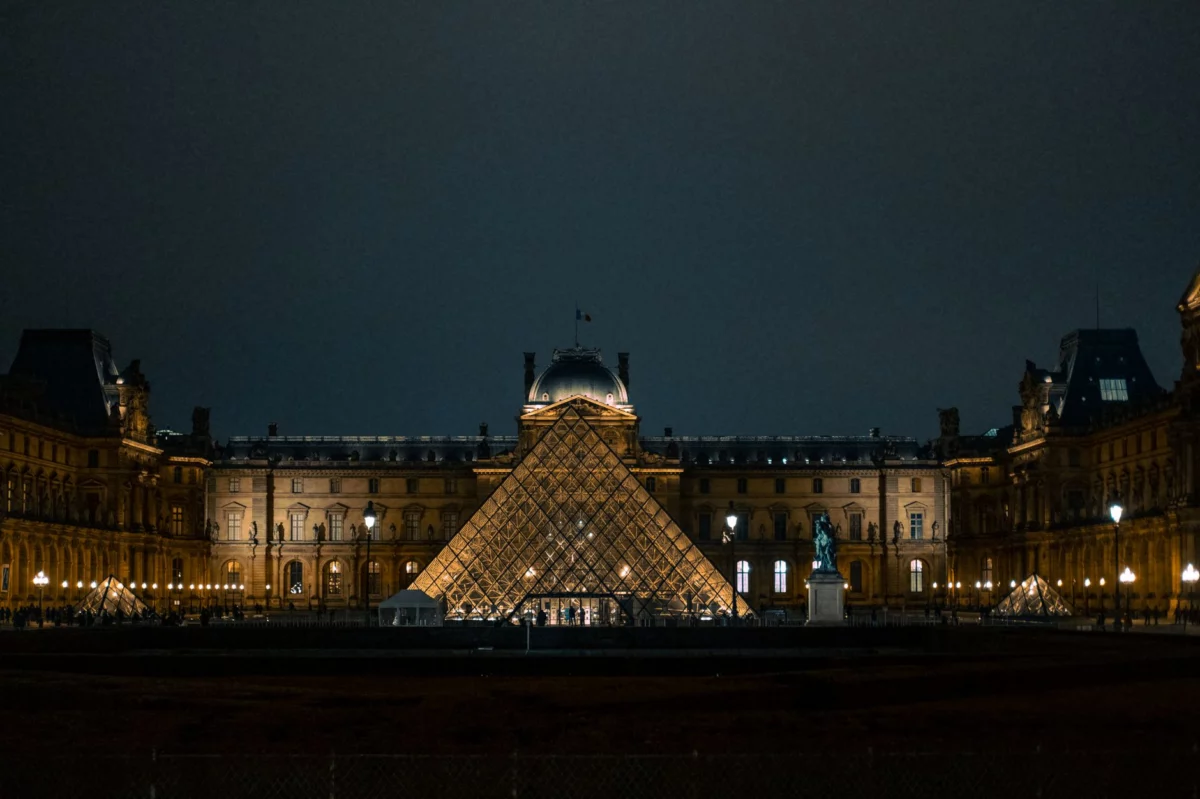
The Louvre stunt in the Mona Lisa hall may have been brushed off as a joke by the people involved, but in one of the world’s most watched museum spaces, it lands as something far more serious: a live test of museum security, public patience, and respect for cultural space.
Louvre Stunt in the Mona Lisa Hall Sparks a Bigger Security Conversation
When two German visitors were arrested after attaching two paintings to a wall in the hall that hosts the Mona Lisa at the Louvre, the act may have seemed like a small lapse in judgment. In reality, it unfolded inside a building that stands for the cultural memory of Paris and the enduring authority of Leonardo da Vinci. A prank in that setting is never only a prank.
What happened in the Mona Lisa hall?
According to police sources, the pair were arrested on Saturday after they stuck two paintings on a wall in the hall that hosts the Mona Lisa inside the Louvre. The report is brief, but the implications are not. Even without a large-scale disruption, the incident forced staff and authorities to react in a room that is built for careful movement, quiet observation, and controlled access. In a place like the Louvre, the line between harmless mischief and a public-order problem can be very thin.
The hall itself is symbolic. It is not just another gallery; it is the room where one of the world’s most recognizable artworks is displayed, drawing visitors from every corner of the globe. That density of attention is part of the experience, but it also magnifies every interruption. What might feel like a minor stunt in another building becomes far more charged here because the room is already under constant scrutiny.
Why the setting mattered so much
The Louvre is more than a museum. It is a monument to preservation, prestige, and public ritual. The painting at its center, the Mona Lisa, is protected and interpreted through layers of meaning, from art history to tourism. The museum’s fame is so immense that even brief disorder can echo widely, especially when it happens in a space associated with a masterpiece by Leonardo da Vinci.
That is why the stunt resonated beyond the room. It touched the logic of cultural guardianship: if a museum cannot remain orderly in the shadow of its most famous work, then what exactly can it guarantee to the public?
Why the stunt was not a harmless joke
In the language of vandalism and art crime, intent matters, but permission matters more. A museum is not a blank wall, and a globally significant gallery is not a stage for improvisation. Even if the paintings placed on the wall caused no visible harm, the act still consumed staff attention, disrupted the room, and raised immediate questions about security response.
That concern is especially sharp in a space where the famous painting is presented behind protective measures, including bulletproof glass. Those barriers do more than shield the artwork. They also signal the museum’s responsibility: access must be possible, but preservation must never be casual. The drama of a masterpiece should never become an excuse for recklessness.
In a museum, attention is precious; disruption is contagious.
Seen that way, the incident is also a reminder of the invisible labor of conservation and restoration of cultural heritage. The job is not only to repair damage after the fact, but to create conditions where damage never happens in the first place.
The gray zone between performance and intrusion
Some public acts borrow the visual force of performance art or protest art. But museums do not have to accept a performer’s framing, and this incident was reported as an unauthorized gesture, not a sanctioned intervention. Once a person crosses that line, the institution must respond as if the event is operational, not artistic.
That distinction matters because museums are among the few public spaces where the meaning of an act can shift instantly. A gesture that might look playful in a private setting can become an example of disrespect, risk, or even criminal conduct when it takes place among priceless works and distracted crowds.
Why museum security has such a hard job
Large museums are engineered for flow: visitors, queues, sightlines, sound, and the constant motion of tourism. The Louvre’s own visitor guidance on the museum’s official website reflects that reality. The challenge is to remain welcoming without becoming vulnerable. Too much restriction turns a museum into a fortress. Too little invites chaos.
For the people on the front line, including every security guard and supervisor, the job is a moving target. They must spot unusual behavior, de-escalate without drama, and protect the collection without making visitors feel like suspects. That is hard enough on a normal day. In the hall that houses the Mona Lisa, it is even harder.
- Notice unusual movements before they become disruptions.
- Respond quickly without causing panic.
- Protect the artwork while keeping the gallery functional.
- Document the incident clearly for investigators and internal review.
This is why the word museum means more than a room of objects. It means a carefully managed public trust. Every rule exists because the institution is trying to preserve not only a work of art, but the experience of encountering it.
Legal and cultural fallout can travel fast
The fact that the suspects were reportedly from Germany gives the episode an international dimension, but the deeper issue is universal. In a city like Paris, where heritage and identity are tightly intertwined, any disruption at the Louvre quickly becomes part of a larger conversation about discipline, hospitality, and cultural stewardship. The museum is a source of pride for France, and its public image matters far beyond the gallery walls.
That is why even a small stunt can have outsize consequences. It can provoke police action, unsettle visitors, and trigger a wider debate about what public access should look like in the world’s most famous museums. The deeper question is not whether the stunt was clever. It is whether any institution can afford to treat such behavior as harmless when the stakes are so high.
FAQs
What happened at the Louvre?
Police sources said two Germans were arrested after they attached two paintings to a wall in the hall that hosts the Mona Lisa. The report describes a stunt, but it was serious enough to draw an arrest and immediate attention from authorities.
Why is the Mona Lisa hall so sensitive?
The room is one of the most watched spaces in world culture because it contains the Mona Lisa and draws intense crowds. That makes it a place where even small interruptions can trigger major security concern.
Can a museum prank lead to arrest?
Yes. If an unsanctioned act disrupts the space, risks damage, or creates a public-order issue, authorities may treat it as a matter for police. In a museum, permission is not a courtesy; it is part of the law of the room.
What readers should watch next
The most important story now is not the stunt itself, but how institutions respond to it. Museums will keep trying to balance openness with control, and that tension is only likely to grow as visitor numbers, attention economies, and public expectations continue to rise. The Louvre is a reminder that the world’s most beloved cultural spaces are also the most delicate. The unanswered question is simple but pressing: how do we keep masterpieces open to the public without turning them into targets for performative mischief?
Frequently Asked Questions
Why was this stunt treated as a serious issue if no artwork was visibly damaged?
Because museums are judged not only by whether damage occurs, but by whether they can prevent risky behavior in the first place. In a room as sensitive as the Mona Lisa hall, an unauthorized action forces staff to react, interrupts visitor flow, and tests security protocols. The lack of visible damage does not erase the breach of control or the potential risk it created.
Did the two paintings attached to the wall pose a direct threat to the Mona Lisa itself?
The report does not suggest that the Mona Lisa was physically harmed. However, the concern is less about direct contact and more about what the act could have escalated into. Any unauthorized object or movement in that hall can distract staff, unsettle visitors, and create a moment where a more serious incident could happen quickly.
Why does the Mona Lisa hall attract more security concern than a regular gallery room?
Because it concentrates global attention in one place. The hall is not just another exhibition space; it is one of the most watched cultural settings in the world. That means every interruption is magnified, and security measures must account for crowds, cameras, and constant movement around an artwork already protected by multiple layers of control.
Could this kind of act ever be considered performance art or protest art?
Only if it is clearly sanctioned by the institution, which this incident was not. Museums can host performances or interventions, but unauthorized acts are treated as intrusion, not art. Once a person acts without permission in a protected cultural space, the museum must respond to the operational risk rather than the claimed artistic intent.
What kind of consequences can people face for a stunt like this in a museum?
Consequences can range from arrest to charges related to trespass, disorderly conduct, or damage depending on local law and the facts of the case. Even if nothing is broken, the act can still be treated as a public-order problem because it diverts staff attention and compromises the museum’s duty to protect its collection and visitors.