
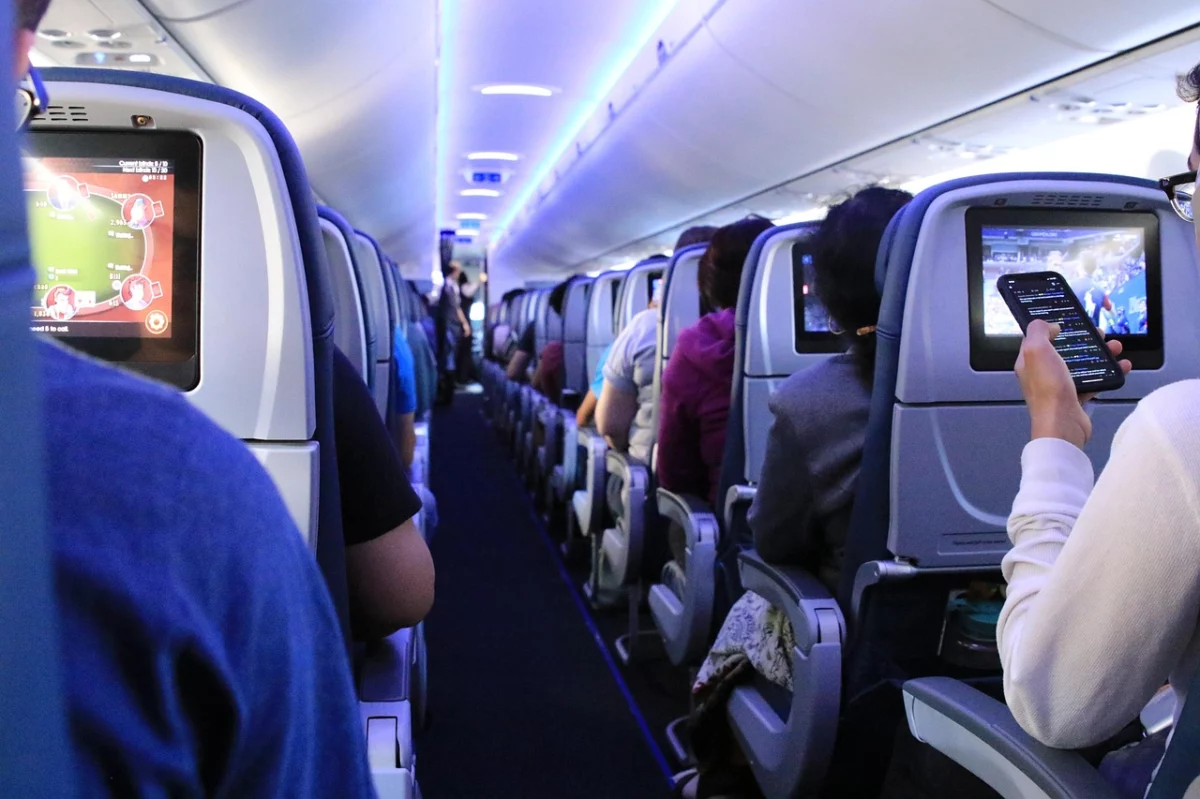
The reported aircraft cabin ceiling collapse on a Boeing 737 over Iran is disturbing for a simple reason: passengers do not expect the interior of a modern aircraft to begin shedding panels in the middle of an emergency landing. Yet the footage also demands discipline. A lost tyre is not the same thing as a collapsing fuselage, and a damaged cabin ceiling does not automatically prove catastrophic structural failure. The real story is about how one mechanical problem can cascade into a larger safety event.
That distinction matters because aviation safety depends on layers. The landing gear keeps the aircraft on the runway; the aircraft cabin protects passengers; the pressurised fuselage carries the load; and the airline‘s maintenance system is supposed to keep all of it within airworthiness standards. When a single flight compromises several of those layers at once, the incident becomes more than a viral video.
What the video suggests, and what it does not prove
The sequence described in the reporting is straightforward enough: the aircraft lost a tyre, the crew diverted, and during the landing sequence the cabin interior began to fail visibly. That is enough to justify alarm, but not enough to identify the root cause. The visible collapse may involve ceiling panels, interior trim, overhead bins, insulation blankets, or fasteners that released under load. None of those, by itself, tells you whether the problem began with the wheel assembly, a vibration event, a prior repair, or a separate interior defect.
That is why investigators do not treat dramatic footage as proof. They compare it with maintenance records, crew reports, tire debris, and flight data. A hard landing, sudden vibration, or wheel well damage can shake loose interior components. But a loose ceiling liner can also be a pre-existing maintenance problem that only became obvious when the aircraft was already under stress. In other words, the visible damage may be the symptom, not the cause.
A cabin failure is not automatically a structural failure. In aviation, that distinction is not semantic; it determines whether the problem was a local component breakdown or evidence of a deeper airframe issue.
Why a tyre problem can escalate so quickly
On an airliner, a tyre is not a trivial consumable. It is part of the energy-management system that lets the aircraft absorb enormous loads at touchdown. A damaged tyre can produce vibration, off-centre loading, brake stress, and debris that affects the wheel well or lower fuselage. On a heavily used airliner, especially one operating under less-than-ideal maintenance conditions, the risk is not only the failed tyre itself but the chain reaction that follows.
What tyre loss can do
- Trigger severe vibration through the landing gear assembly.
- Damage wheel-well components or nearby wiring and panels.
- Force the crew into an emergency landing under time pressure.
- Increase the chance of a hard touchdown if the aircraft must land with degraded handling.
The key point is that a tyre issue can be operationally serious without being visually dramatic until the landing phase. Once the aircraft is already stressed, unsecured cabin components may begin to move. That is especially true if there is pre-existing wear in interior fixtures, because the vibration spectrum of a compromised landing can exceed what a normal cabin installation was intended to tolerate.
How a cabin ceiling actually fails
Cabin ceilings are not load-bearing structures in the same sense as the fuselage, but they are not decorative either. The overhead lining conceals wiring, ducts, insulation, and structural attachments. In an aircraft cabin, panels are designed to remain secure under normal turbulence, pressure cycles, and maintenance access. When they fail, the cause is usually one of four things: bad fastening, material fatigue, impact damage, or improper reinstallation after repair.
Pressurisation and vibration are usually the background, not the headline
Repeated cycles of cabin pressurization expand and contract the aircraft structure over time. That does not mean every ceiling failure is caused by pressure itself. More often, pressure cycles and vibration expose weaknesses already present in the interior assembly. If a panel was loosened, cracked, or poorly secured, the combination of turbulence, braking, or landing shock can finish the job.
This is where the public narrative often becomes too simple. A passenger sees the ceiling come down and assumes the aircraft broke apart. Investigators ask a more exact question: did the aviation safety system fail at the structural level, or did the interior fail because a smaller maintenance issue went unresolved? The answer matters because the remedies are very different. In some cases the issue is closer to structural integrity of the cabin lining than to the wing, fuselage skin, or landing system itself.
Why video alone can exaggerate the scale of the failure
Modern incident videos are compelling because they compress everything into a few seconds: shaking camera, loud alarms, passengers shouting, and panels moving in and out of frame. That visual chaos can make a partial detachment look like a total collapse. A ceiling liner can hang, bounce, and rip at several points without the aircraft structure itself being compromised. In the confined space of a cabin, even a local defect can look like the entire interior is failing.
That is why the image itself is only one piece of evidence. Perspective matters. A camera pointed upward can hide intact sections of the panel; darkness can make a small tear look like a full rupture; and vibration can blur what is actually a limited but dangerous loss of attachment. The public sees spectacle. Investigators see geometry, force paths, and maintenance history.
What investigators will examine first
Any credible investigation will move from the obvious to the technical. Officials will look at the tyre fragments, wheel assembly, landing gear logs, and the cabin debris pattern. They will also want the crew’s reports, the flight profile, and any evidence of prior cabin repairs. If the aircraft suffered a hard landing, the event may have created forces that were enough to reveal multiple defects at once.
| Evidence | Why it matters |
|---|---|
| Tyre and wheel fragments | Shows whether the failure was a blowout, impact damage, or a maintenance-related defect. |
| Cabin panel attachment points | Reveals whether the ceiling liner was already loose, cracked, or improperly secured. |
| Flight data recorder and cockpit voice recorder | Helps reconstruct speed, descent rate, vibration, and crew response. |
| Maintenance records | Establishes whether the aircraft had prior tyre, wheel, or interior repair issues. |
| Runway surface condition | Indicates whether debris, surface damage, or braking conditions contributed to the event. |
That checklist is standard because airline incidents are rarely explained by one dramatic detail. An aircraft can be mechanically sound in one area and neglected in another. The role of investigators is to separate the two.
Why the passengers’ risk was real even if the plane landed
One reason the footage is so unsettling is that the threat was not theoretical. Falling panels, unsecured overhead fixtures, and sudden cabin movement can injure passengers directly. The most obvious risks are head impacts, cuts, panic-related injuries, and people standing up at the wrong moment. In a pressurised cabin, even a relatively local failure can create the impression that the aircraft is disintegrating.
That is also where the role of the flight attendant becomes critical. Cabin crew are trained to keep passengers seated, brace them when needed, and prevent a confusing interior event from becoming a mass panic. On a normal flight, that work is routine and invisible. During a failure like this, it is the difference between controlled disorder and a secondary injury event.
The public often underestimates how quickly an interior failure can degrade decision-making. A passenger who hears loud mechanical noise and sees the ceiling loosen may interpret the event as an imminent crash, even if the aircraft is still controllable. This is why survivability in aviation is not only about the airframe; it is also about crew coordination, seat-belt compliance, and whether the cabin layout remains safe during abnormal loads.
The maintenance issue behind the drama
If the investigation finds a mechanical cause, the most likely lesson will be unglamorous: maintenance matters more than the aircraft’s age or brand name. A Boeing 737, like any mature commercial design, depends on a disciplined inspection regime. When that regime is weak, problems accumulate in places passengers never see. Small defects in the interior can coexist with wheel or brake wear until one operational stress event exposes them all at once.
That is why the maintenance angle should not be dismissed as boring. It is the core of aircraft maintenance and airworthiness. Regulators such as the Federal Aviation Administration and the International Civil Aviation Organization set the framework, but the operator still has to execute it in the hangar and on the ramp.
In practice, that means inspectors should ask uncomfortable questions: Was the tyre within its service limits? Were interior panels recently opened and re-secured? Was the aircraft dispatched with deferred defects? Did the crew see warning signs before the cabin started to fail? If those questions are not answered candidly, the next incident will be the same story with a different headline.
What this says about Boeing 737 operations, not just one flight
The Boeing name carries enormous public attention, but the brand should not become a shortcut for diagnosis. A Boeing 737 is one of the world’s most widely used narrow-body aircraft, which means incidents on the type receive amplified scrutiny. That is not unfair. It is the price of scale. When a high-frequency platform has an interior failure during a landing after tyre loss, the event becomes a test case for maintenance culture across the fleet.
Still, the aircraft type is only part of the story. The broader issue is that modern aviation depends on interlocking systems: structural engineering, inspection schedules, dispatch decisions, runway conditions, and crew discipline. The failure of one component should not produce the failure of the cabin. If it does, that points to a weak link in the system rather than a mystery in the sky.
What readers should watch for next
The next credible reporting should answer four questions: Was the tyre loss the initiating event, or a coincidence? Did the cabin ceiling fail because of vibration, impact, or previous damage? Did investigators find evidence of poor maintenance or a one-off mechanical defect? And most importantly, is the lesson about a single aircraft or about a wider inspection problem?
That is the real test of a serious aviation investigation. The dramatic footage will circulate because it is emotionally powerful. The useful knowledge will come later, in the technical findings. If the root cause is a maintenance lapse, then the fix is procedural and immediate. If the cause is a rare cascade of mechanical failures, then the industry must understand how the cascade crossed from the wheel assembly into the cabin. Either way, the unanswered question is not whether the passengers were frightened; it is why a modern airliner allowed the interior to collapse at all.
Frequently asked questions
Can a tyre failure cause a cabin ceiling to fall?
Indirectly, yes. A tyre failure can create severe vibration, debris, or a hard landing that exposes pre-existing weaknesses in the cabin interior. But the ceiling itself usually fails because of loosened fasteners, damaged panels, or poor reinstallation, not because the tyre somehow reaches the cabin.
Does a falling cabin panel mean the aircraft structure was breaking apart?
Not necessarily. The interior lining is different from the load-bearing airframe. A cabin panel collapse may indicate a local equipment or maintenance problem rather than a fuselage failure. Investigators must separate cosmetic or interior damage from structural damage.
What should passengers do in an abnormal cabin event?
Stay seated if possible, keep the seat belt fastened, follow crew instructions, and avoid opening overhead bins or moving into the aisle unless directed. In a sudden cabin failure, the crew’s instructions are the safest guide.
The point no headline can capture
The important insight is that aviation safety is usually lost in small increments, not cinematic explosions. A lost tyre, a loose panel, a vibration event, and a hurried landing can combine into a frightening failure that looks spectacular from the cabin and mundane in the maintenance record. That mismatch is exactly why investigators need to be exact, not dramatic.
What to watch next is whether the final report describes a single bad component or a chain of neglected details. If the answer is the latter, the incident will matter far beyond one flight in Iran, because it will show how quickly interior safety can unravel when inspection discipline slips. If the answer is the former, it will still be a warning: in commercial aviation, even a small defect can become visible to every passenger in the cabin before anyone on the ground has a chance to explain it.
Frequently Asked Questions
Does a damaged cabin ceiling mean the aircraft suffered a structural failure?
Not necessarily. In aviation, interior panels, liners, and overhead fittings can fail without the fuselage itself being structurally compromised. A cabin ceiling collapse may reflect loose fasteners, vibration damage, or pre-existing maintenance issues. Investigators need flight data, maintenance records, and physical inspection before concluding there was any real airframe failure.
How can a tyre failure lead to damage inside the cabin?
A tyre failure can create strong vibration, off-centre loading, and debris that affects the landing gear or wheel well. If the aircraft then lands under stress, those forces can travel through the airframe and shake loose interior components. The cabin damage may therefore be an indirect result of the landing emergency rather than the tyre itself.
Why do investigators avoid drawing conclusions from viral footage alone?
Because dramatic video shows the symptom, not always the cause. A ceiling panel falling does not reveal whether the trigger was a hard landing, wheel-well damage, a prior repair defect, or a separate interior fault. Investigators compare the footage with maintenance logs, crew reports, debris patterns, and flight data to reconstruct the sequence accurately.
Could the ceiling panels have been weak before the incident?
Yes. The visible collapse may expose pre-existing wear, poor fastening, or an improper reinstallation after maintenance. Stress from an emergency landing can make a marginal interior component fail suddenly, even if it might have remained in place during normal operations. That is why a cabin failure often points to maintenance history as much as to the emergency itself.
Is a tyre problem on its own enough to force a serious emergency landing?
It can be, especially if the tyre loss affects handling, brake performance, or the wheel well. On its own, a failed tyre is not always catastrophic, but it becomes much more serious when combined with vibration, debris, or a damaged landing gear assembly. The risk comes from how quickly one fault can cascade into several.